What makes a Carmel Highlands luxury home unforgettable? It is not just the ocean view or the address. In this stretch of the Monterey County coast, architecture is shaped by steep hillsides, exposed bluffs, and a long-standing expectation that homes should settle quietly into the landscape. If you are exploring a luxury rental or trying to understand what defines this market, this guide will help you recognize the architectural styles that matter most. Let’s dive in.
Carmel Highlands Architecture Starts With the Land
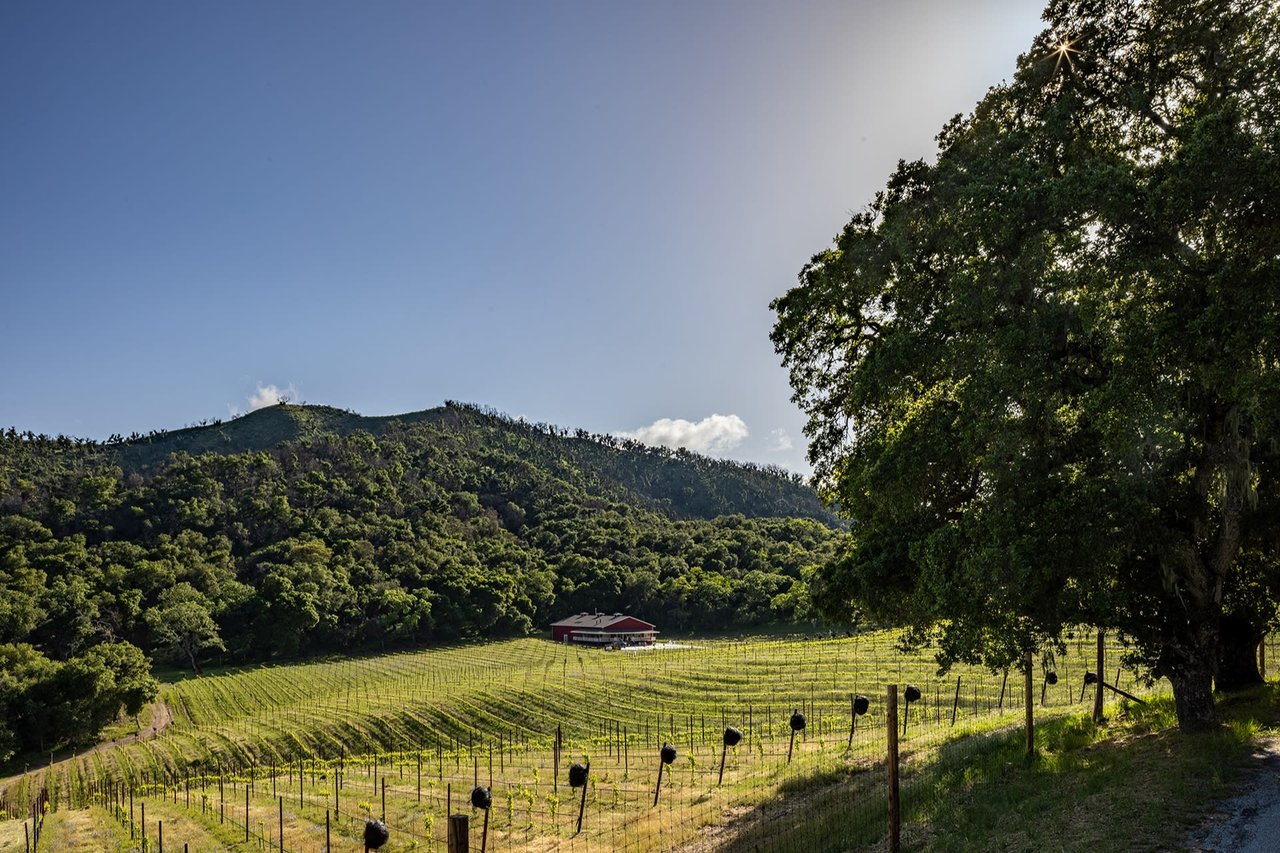
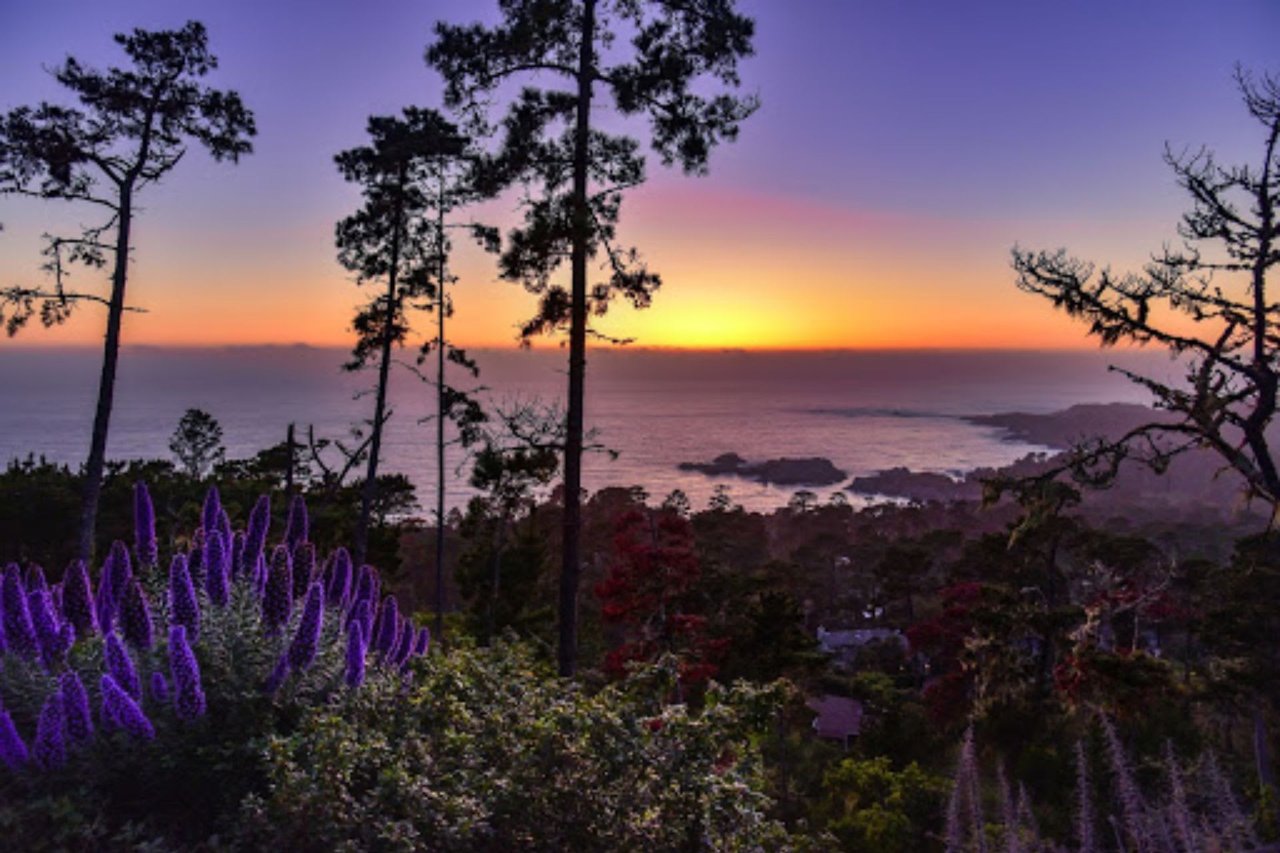
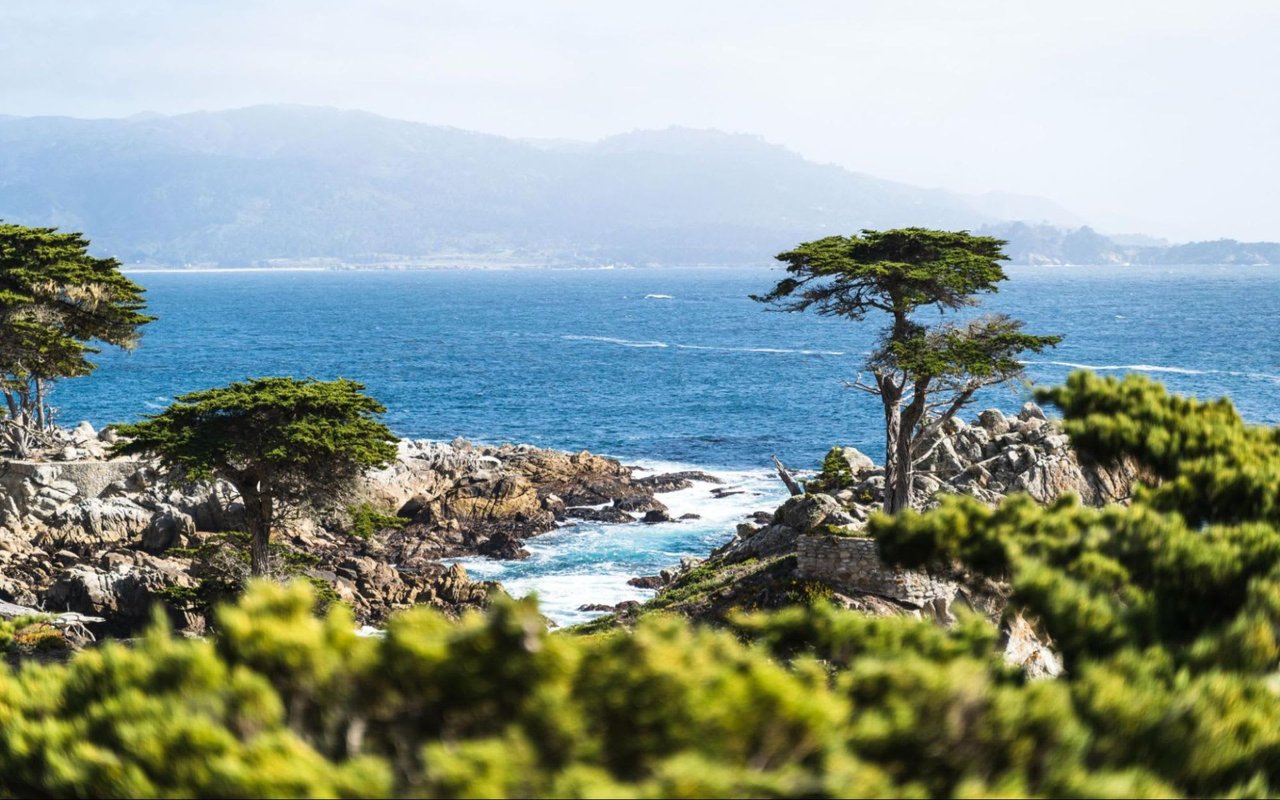
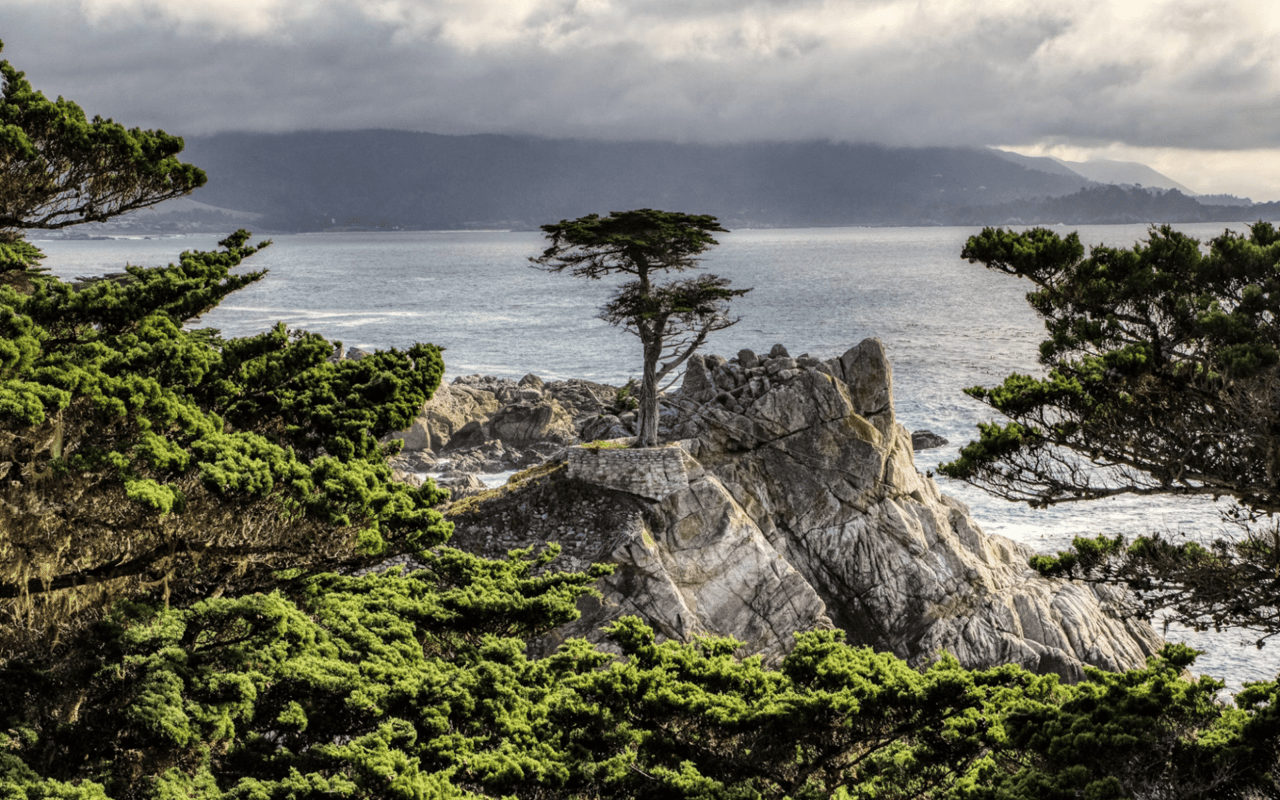
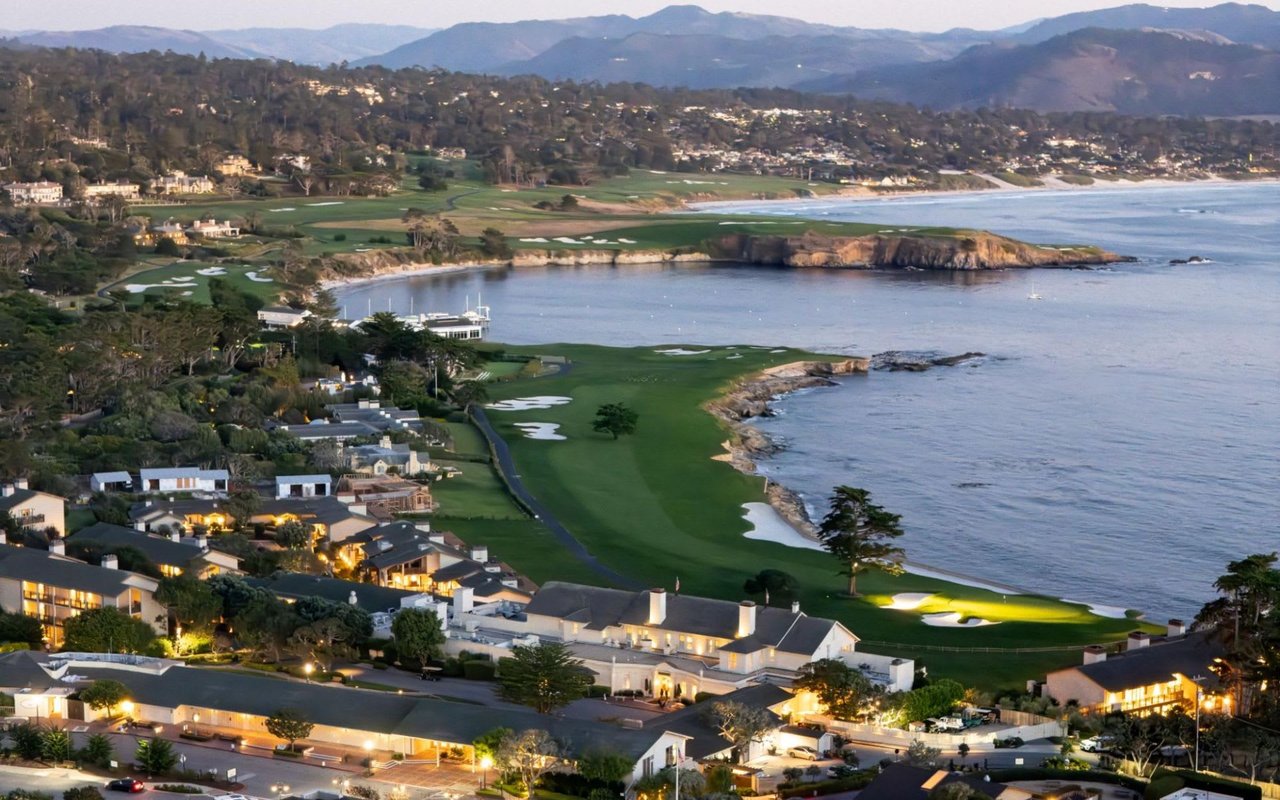
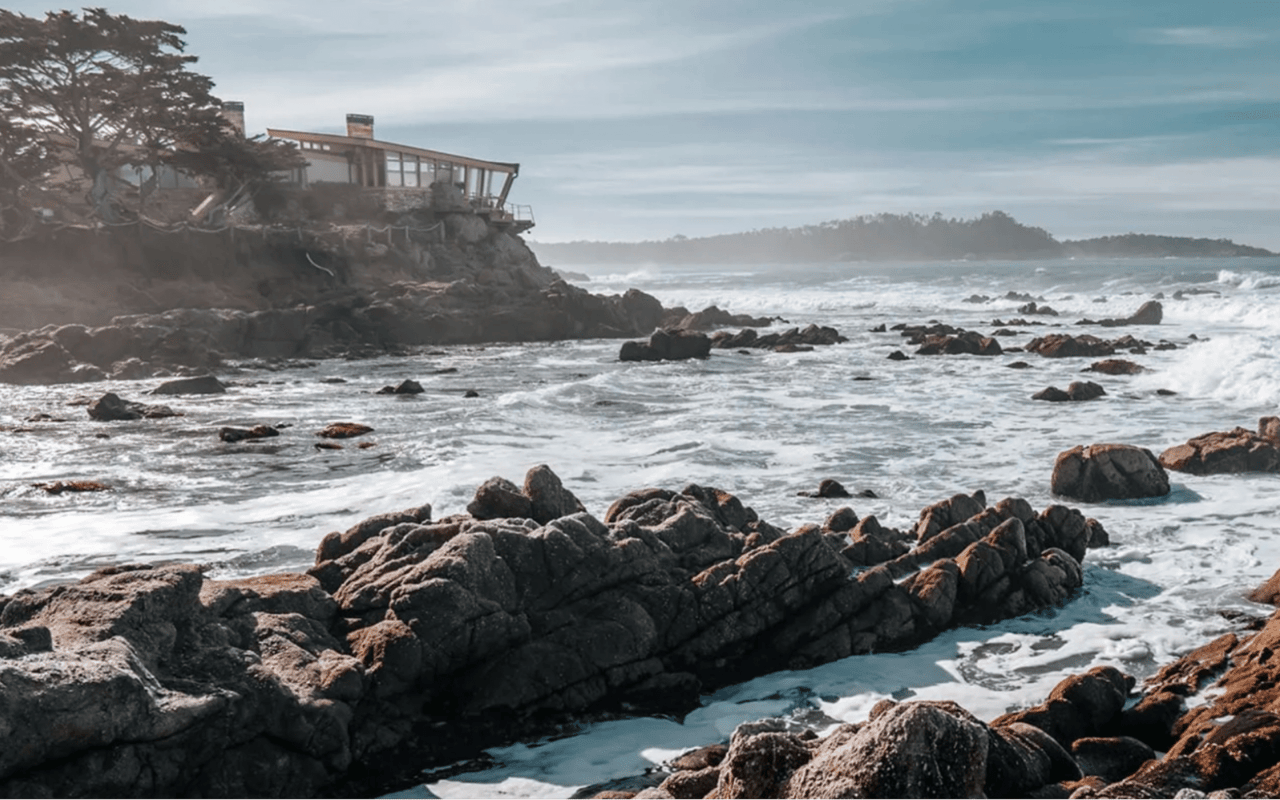
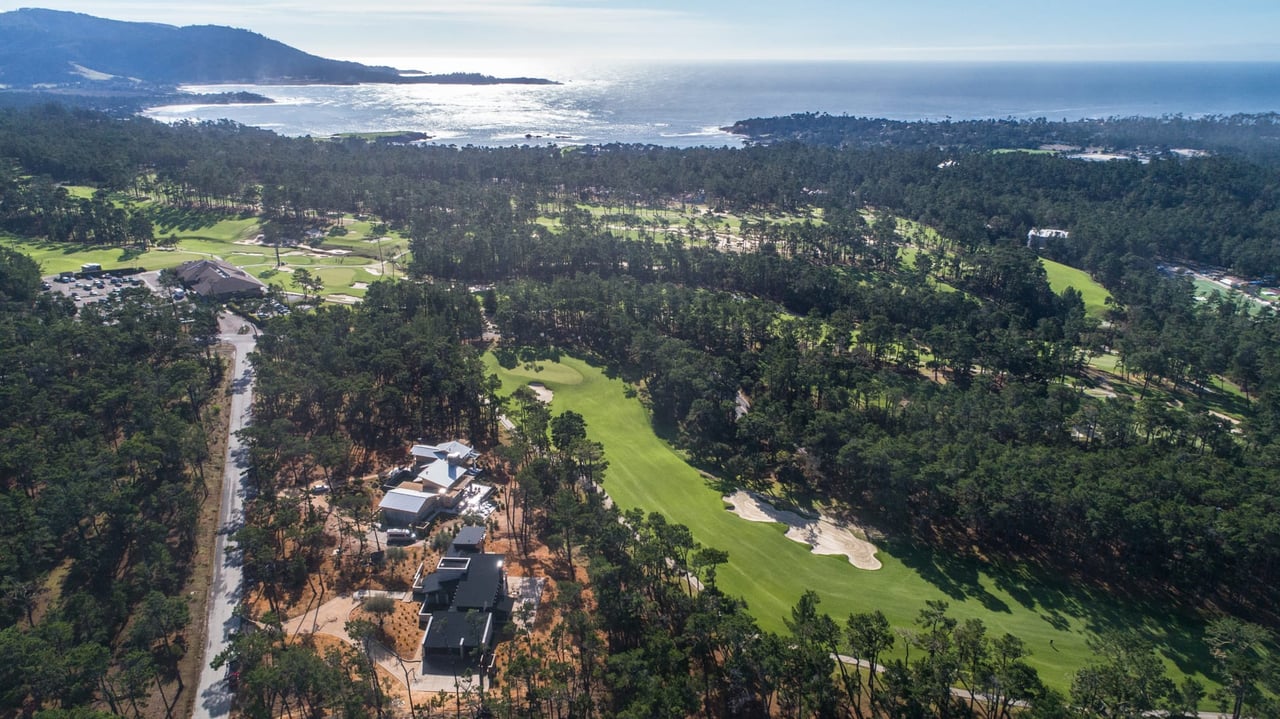
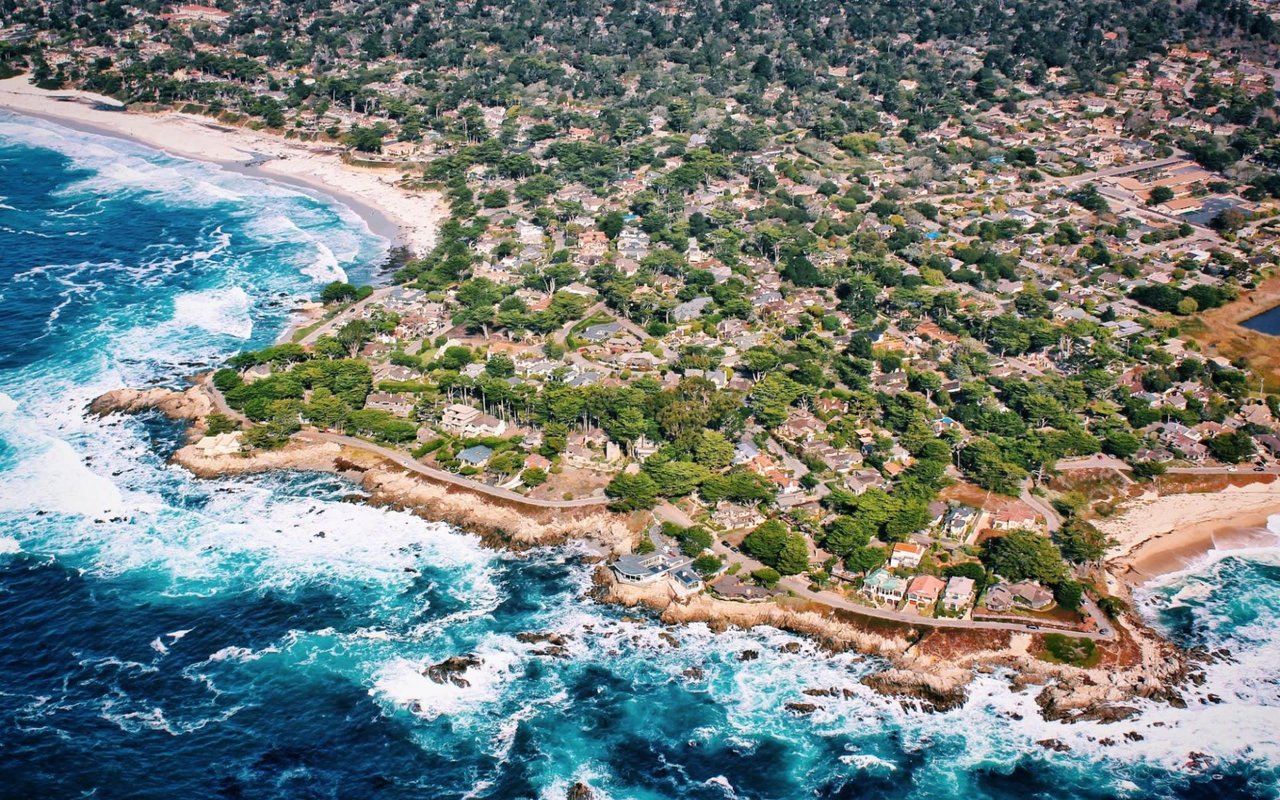
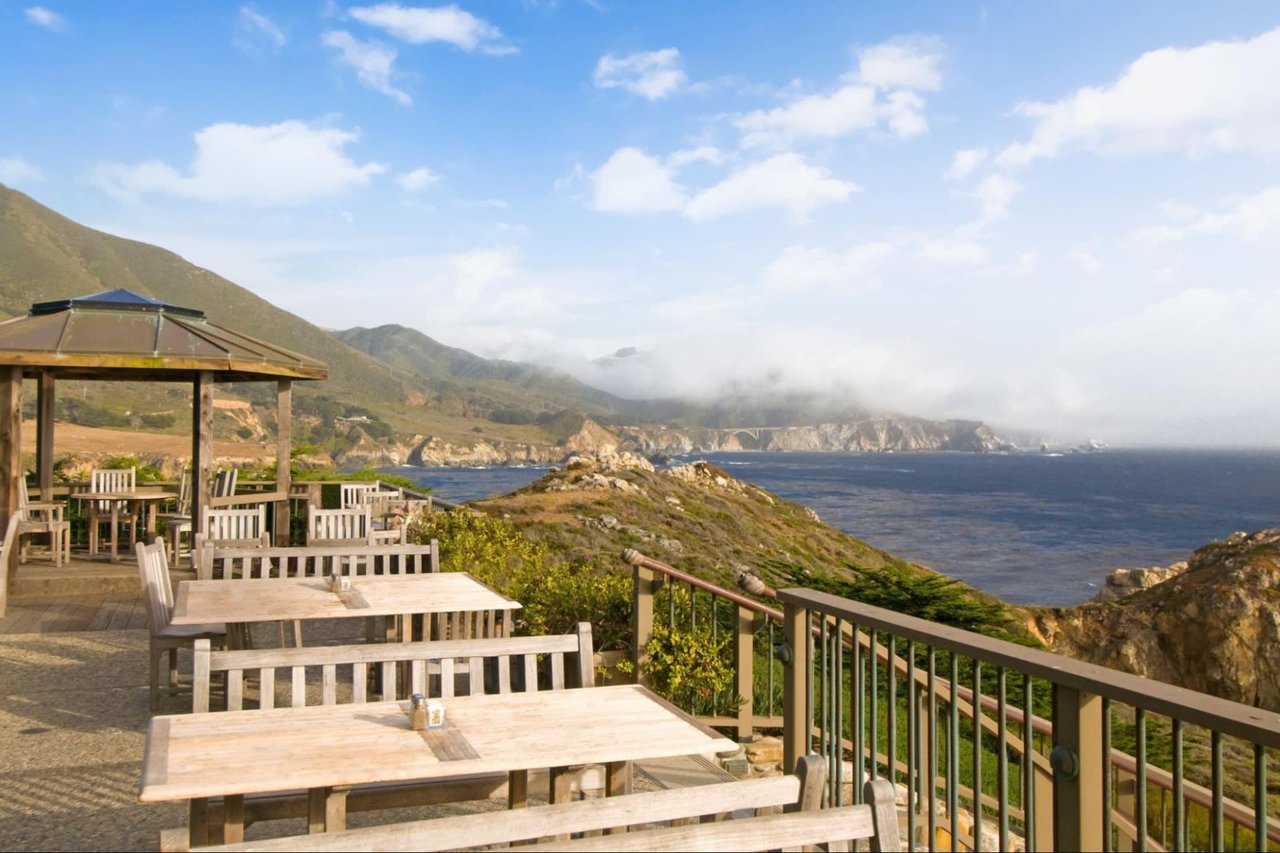
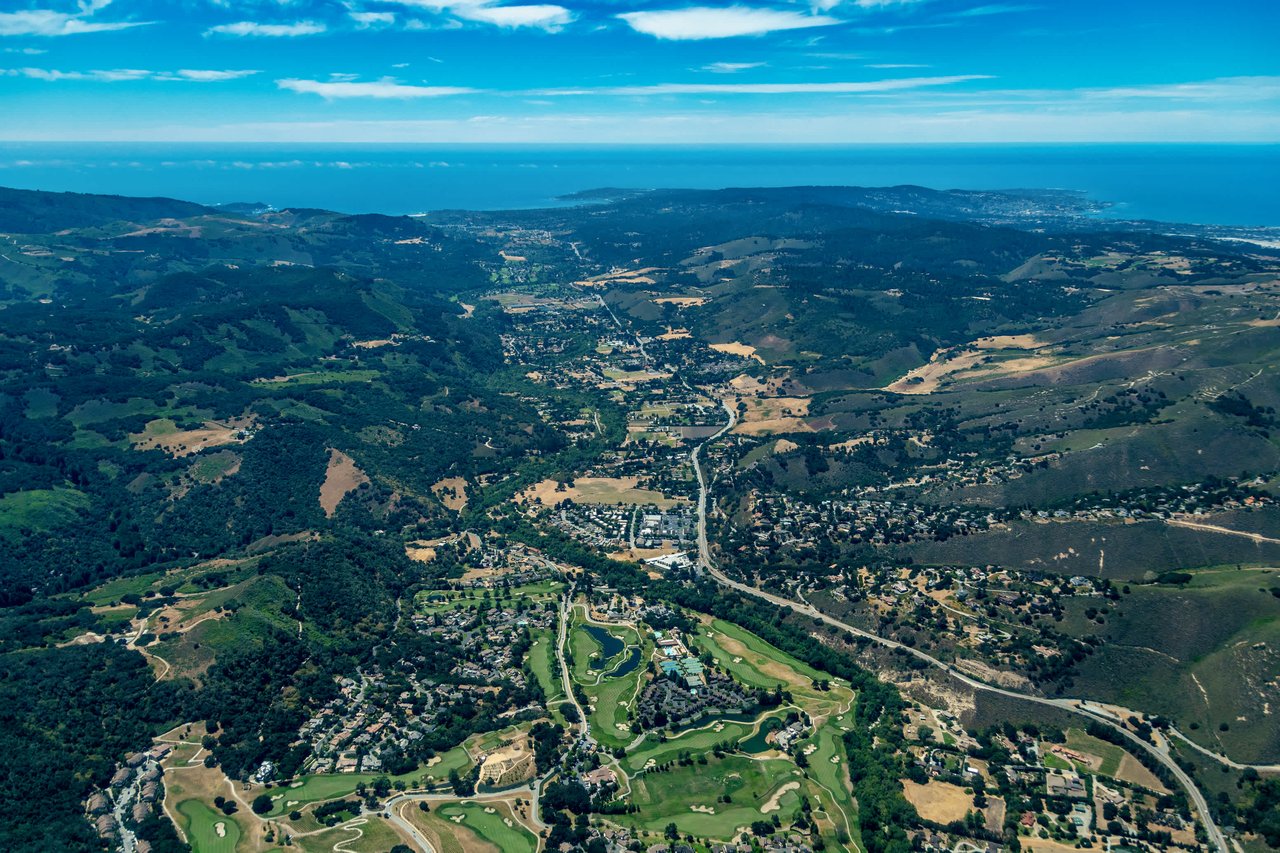
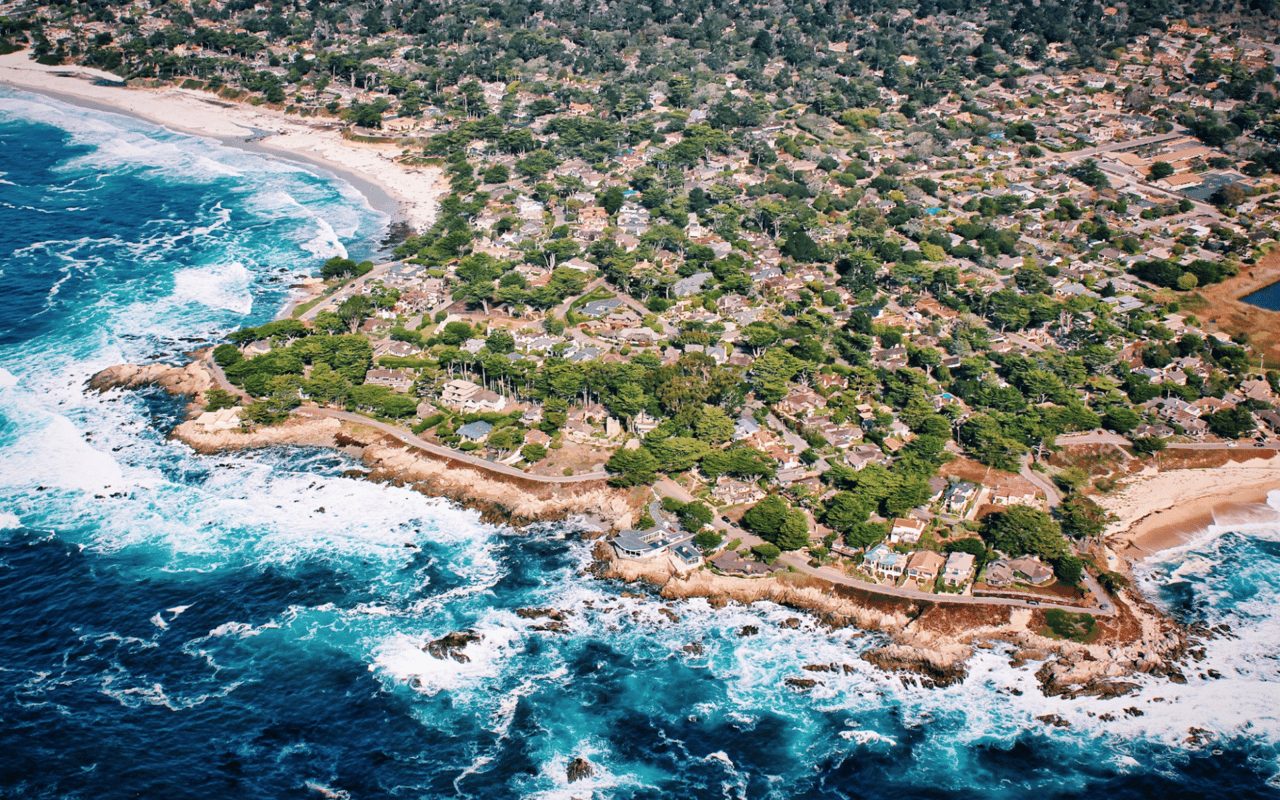
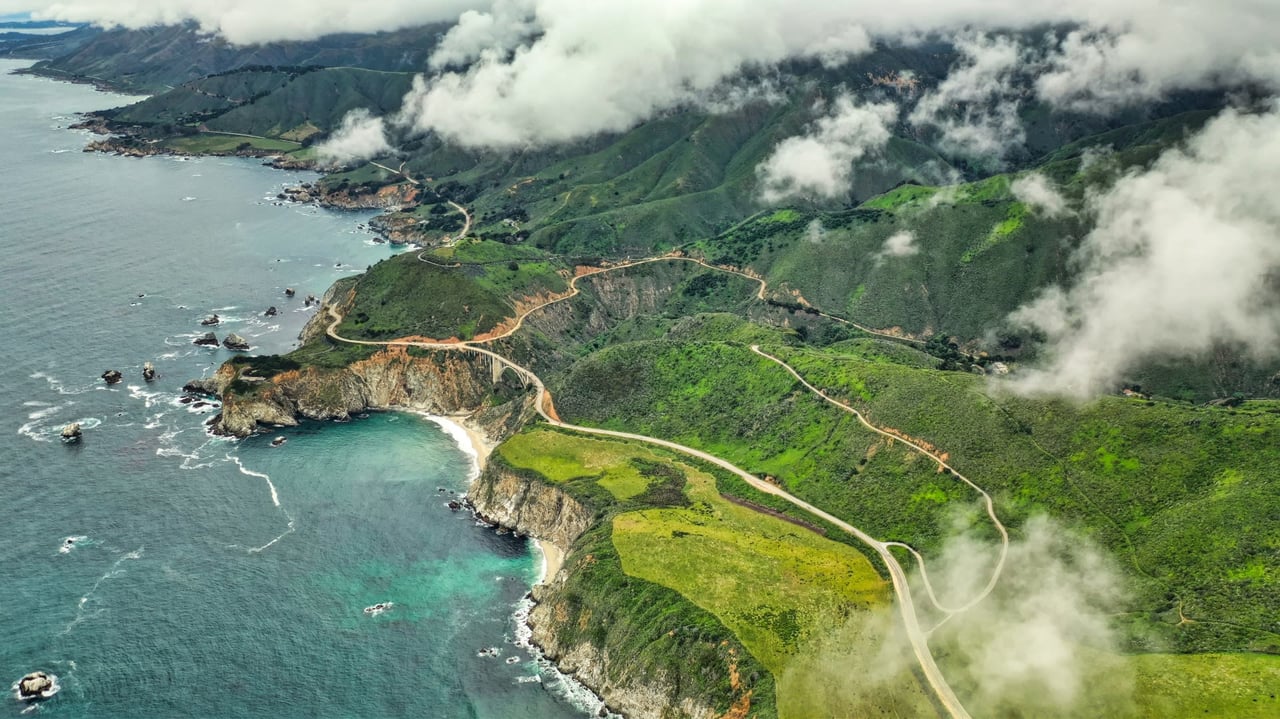
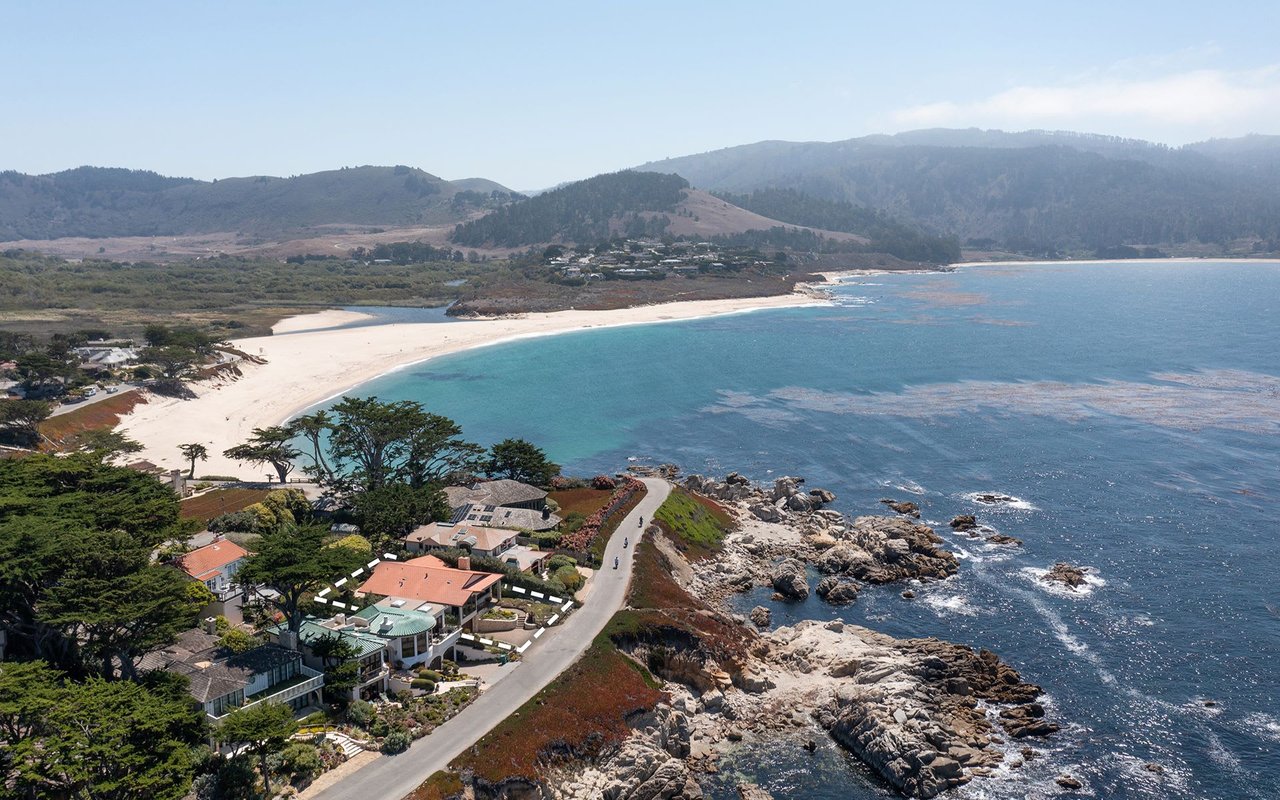
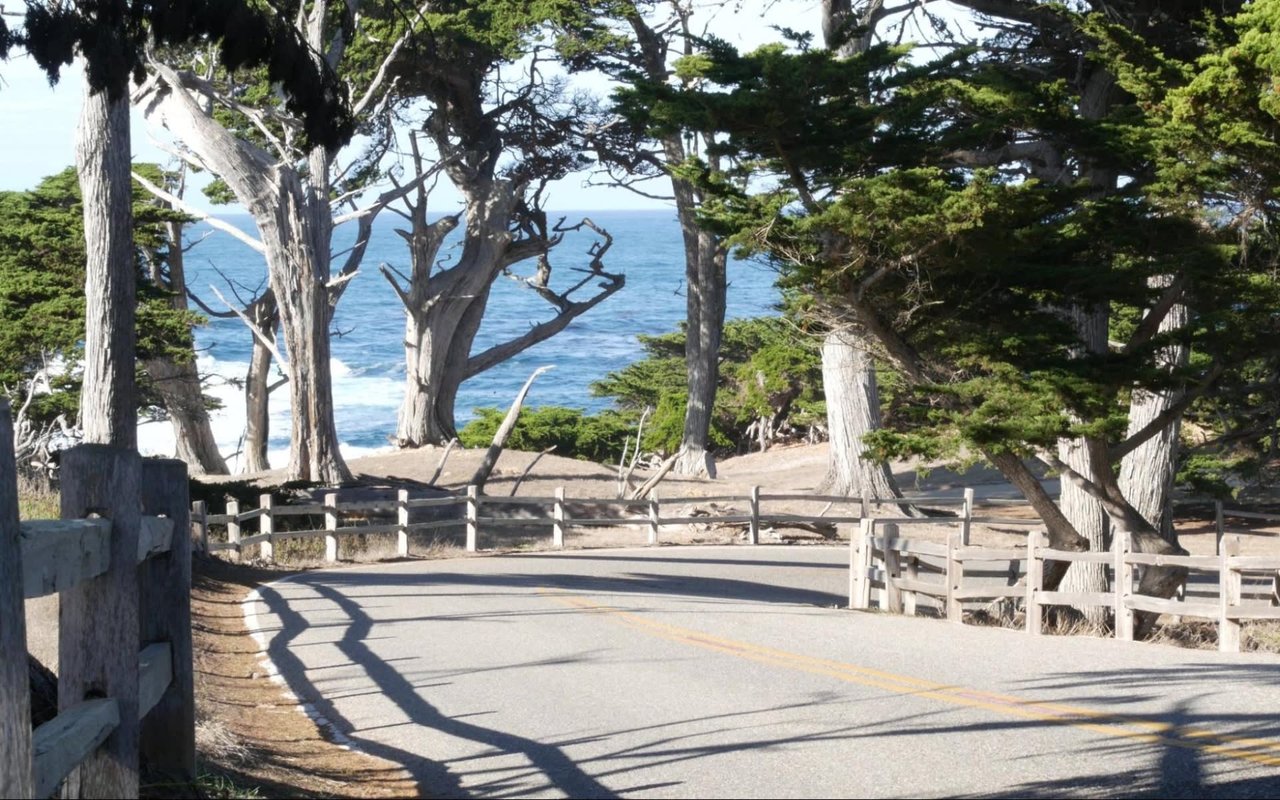
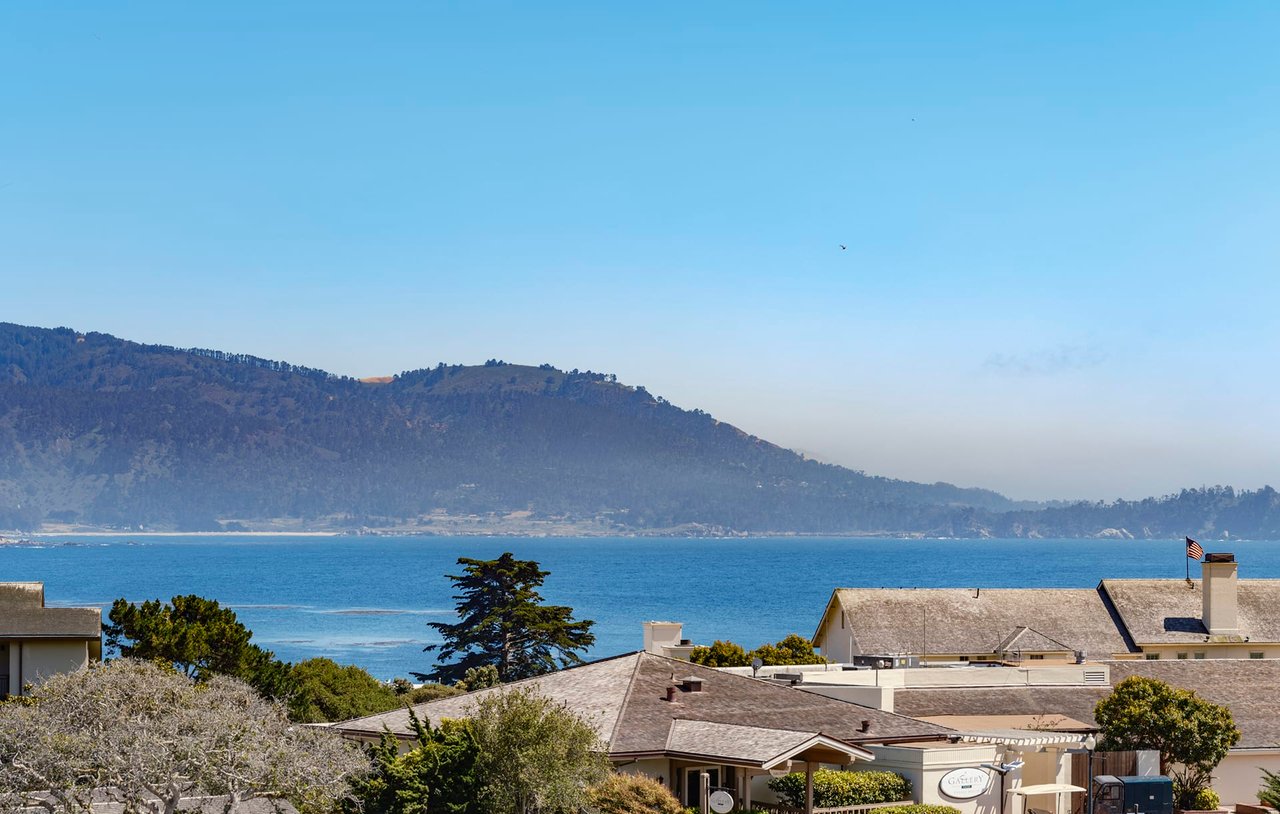
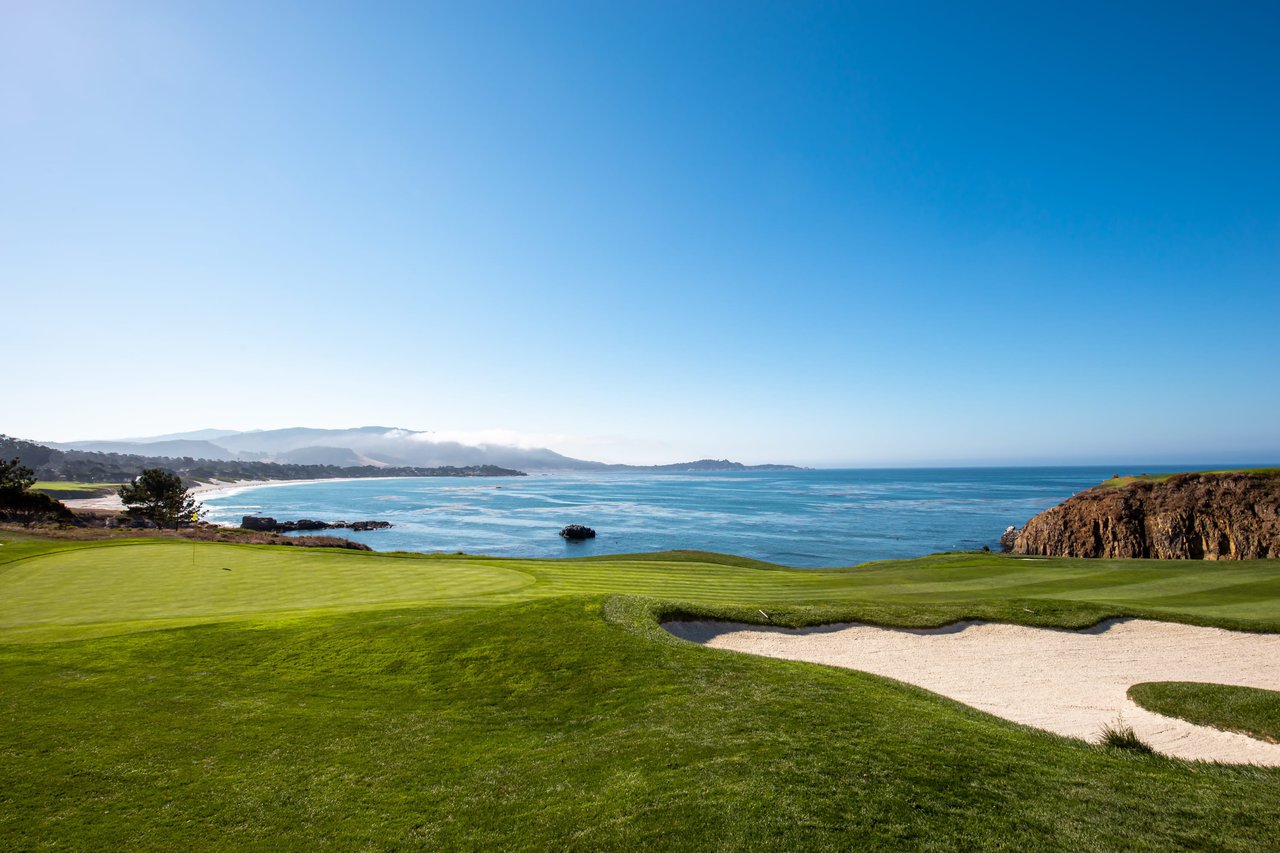
Carmel Highlands is best understood as a landscape-first coastal enclave. Monterey County describes the Carmel Highlands-Riviera area as a low-density residential area on both sides of Highway 1 between Point Lobos Reserve and Malpaso Creek, with steep and winding roads, shallow soils, and development limits tied to slope conditions.
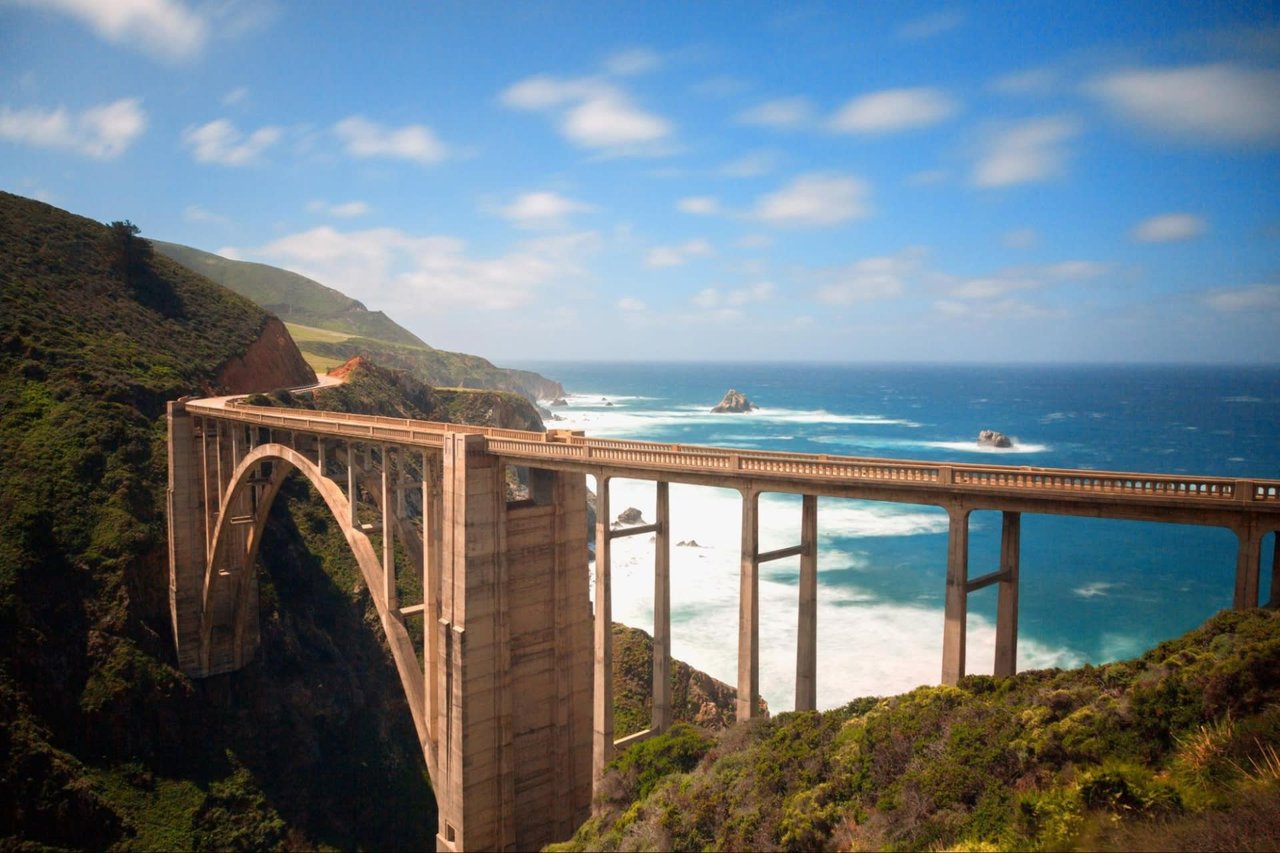
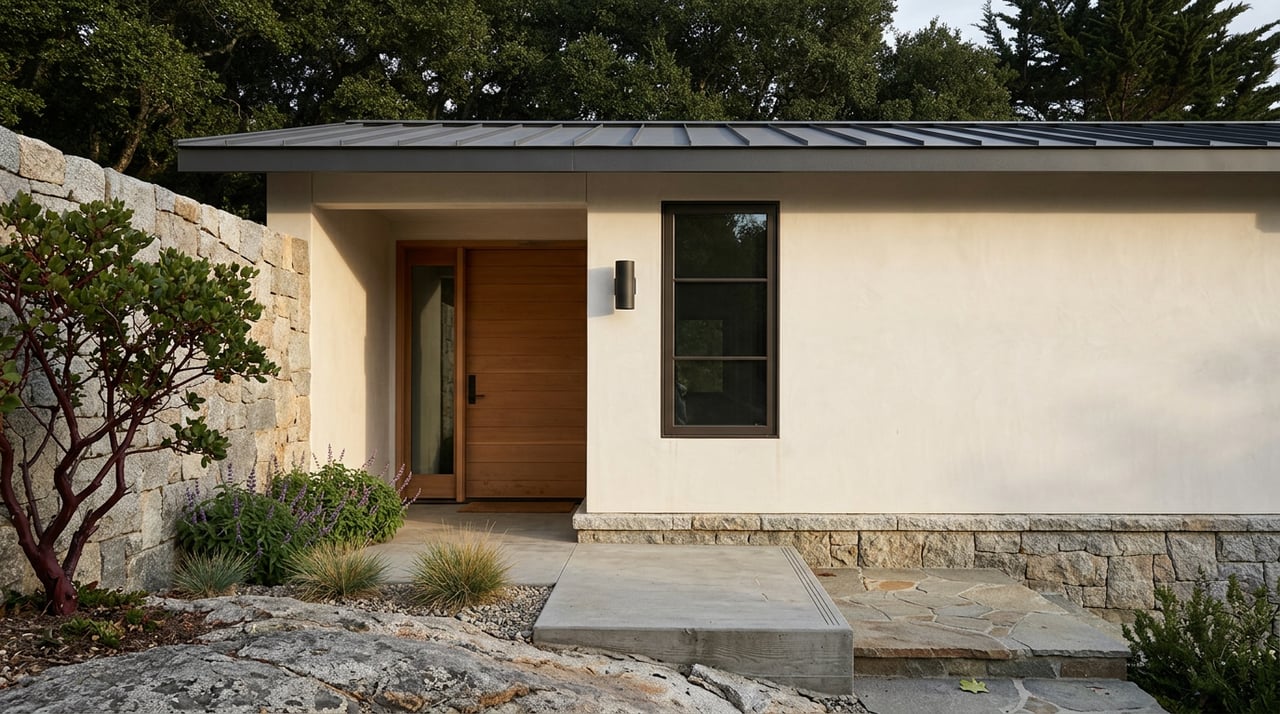
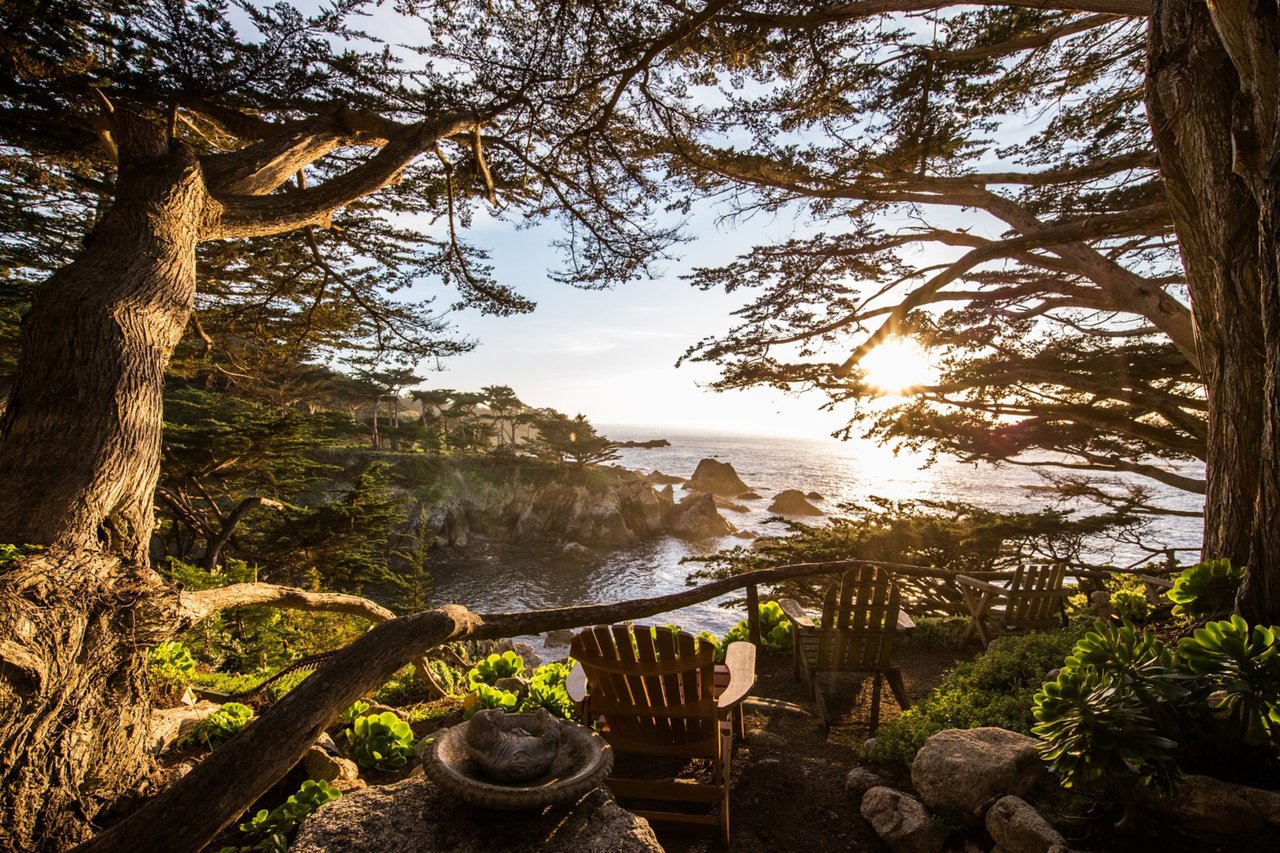
That physical setting affects almost every home you see. Rather than a conventional neighborhood pattern, Carmel Highlands often feels like a bluffside landscape with homes embedded into it. County coastal policy also calls for development in the public viewshed to harmonize with the scenic setting, minimize visibility, and use forms and materials that read naturally against the coast.
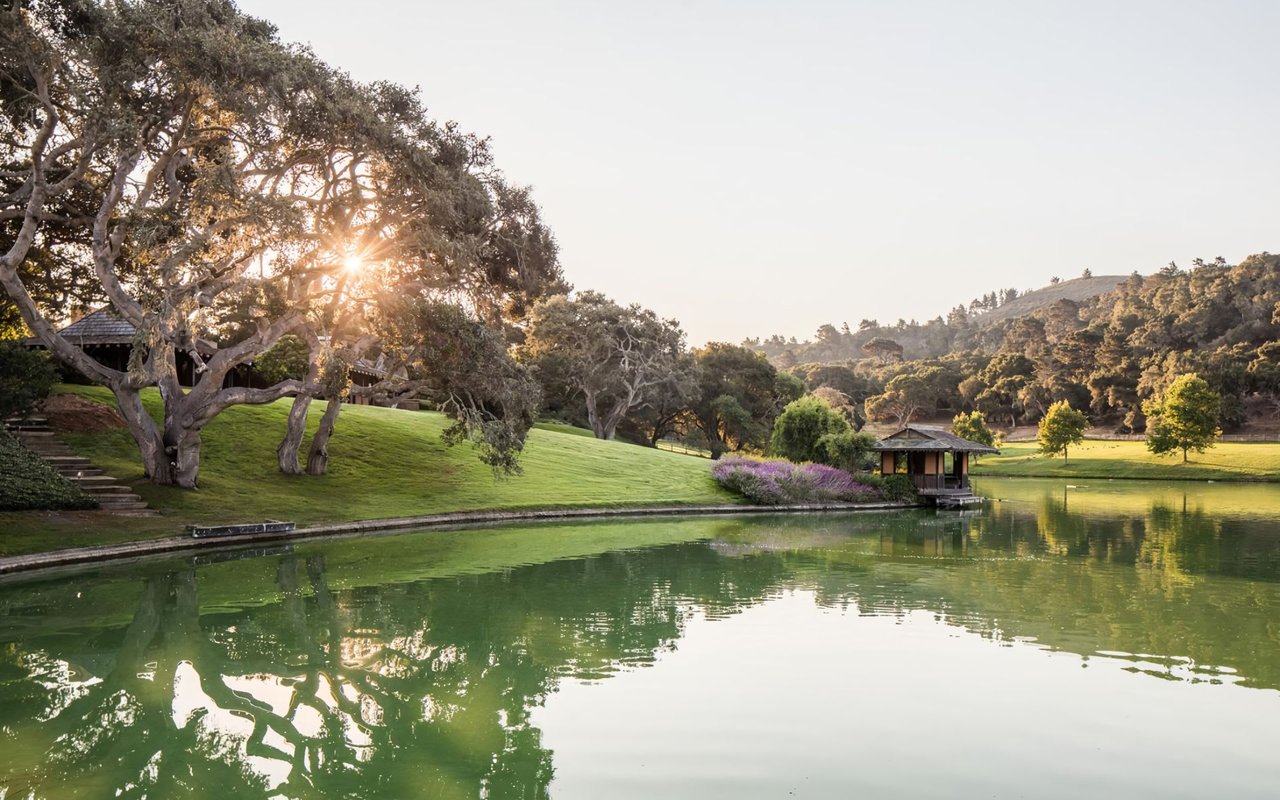
For you as a renter or market watcher, that means luxury here is often quieter than expected. The most distinctive homes are not trying to dominate the site. They are designed to work with the slope, preserve views, and blend into the Pacific edge.
The Highlands’ Design Story
The architectural character of Carmel Highlands has deep roots. Monterey County’s historic context records the area’s subdivision in 1915, the opening of Highlands Inn in 1917, and early landmark commissions like D.L. James’s bluff-top home by Charles Greene in 1918.
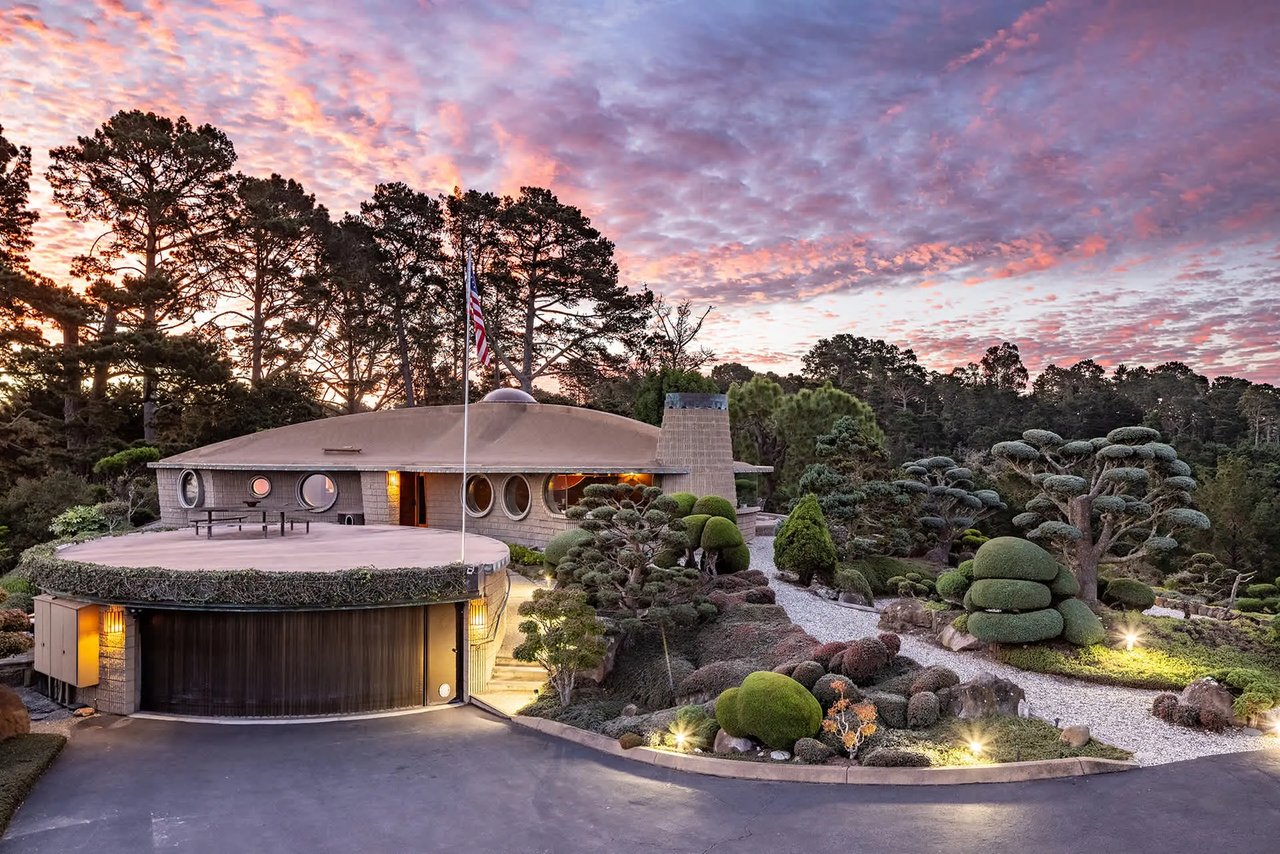
The area was also shaped by artists and creative builders. Historic records note that artist William Ritschel later built his well-known “Castle” in the Highlands with a Spanish stone mason, adding to the area’s expressive and site-specific design tradition.
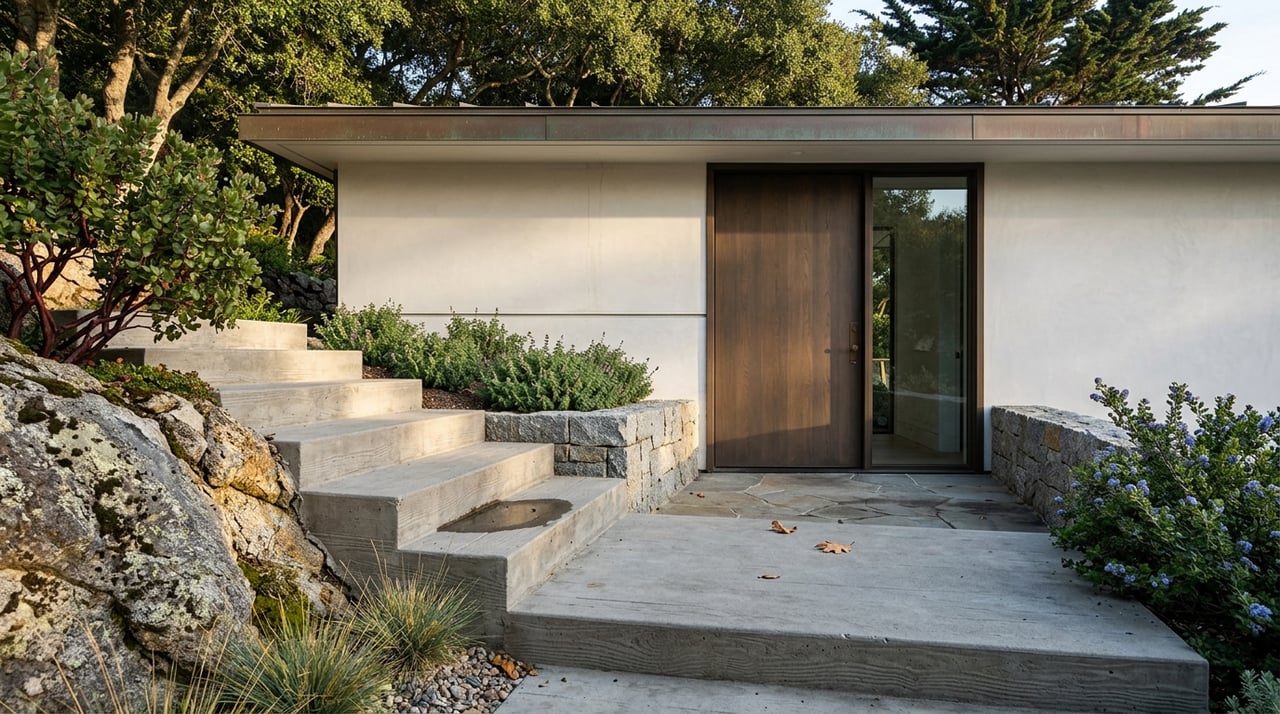
Across the broader Carmel area, Arts & Crafts values strongly influenced the built environment. Later modernist homes expanded that legacy with clean lines, natural materials, large expanses of glass, skylights, terraces, decks, and close integration with the landscape.
Three Styles Define Carmel Highlands Luxury Homes
While every property responds differently to its site, three architectural threads show up again and again in Carmel Highlands luxury homes.
Glass-and-Steel Modern Homes
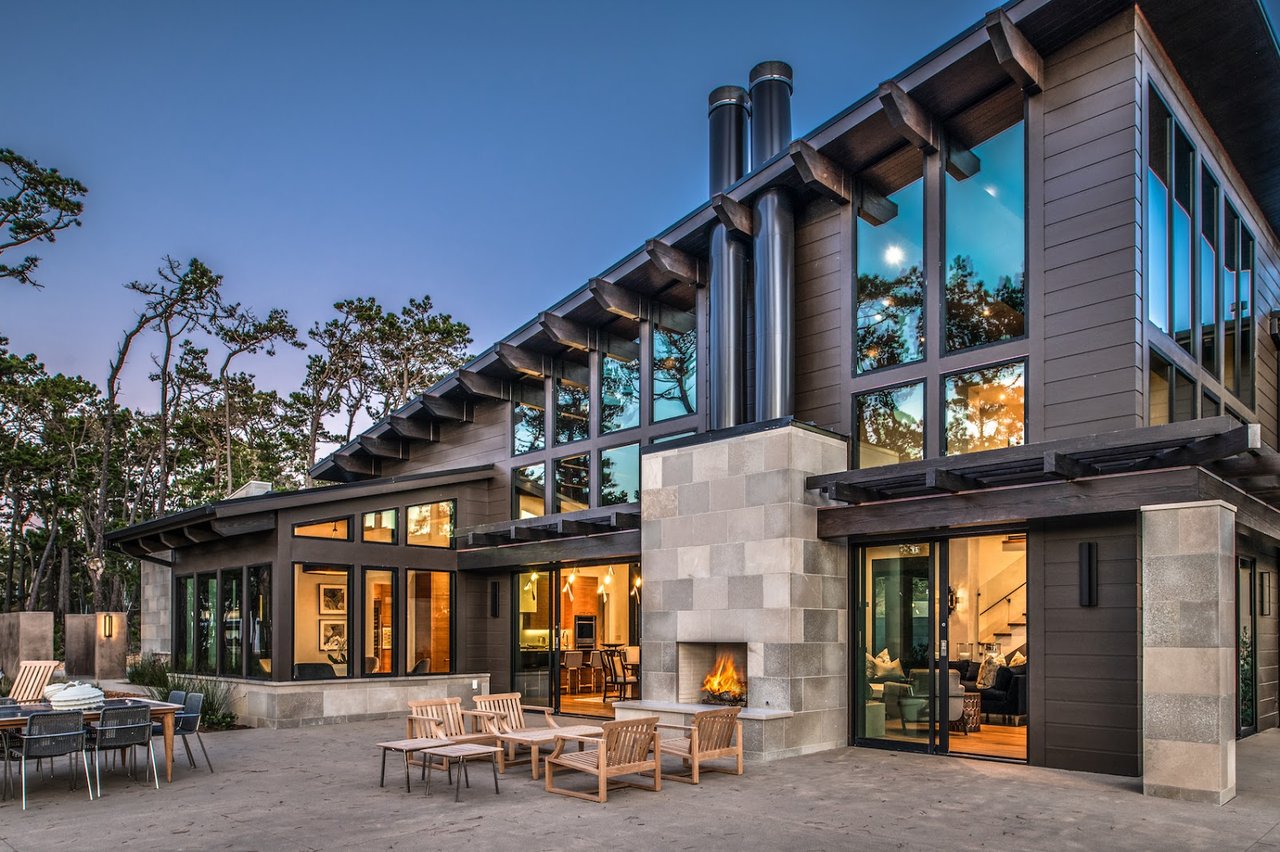
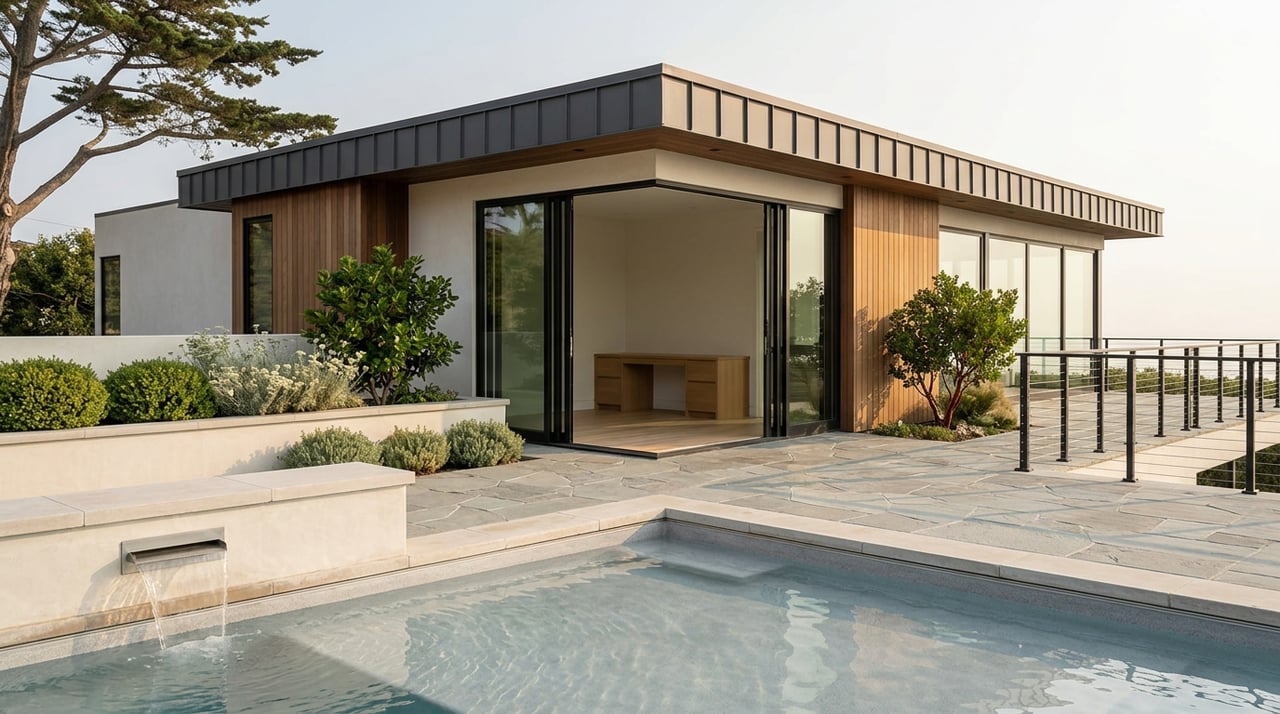
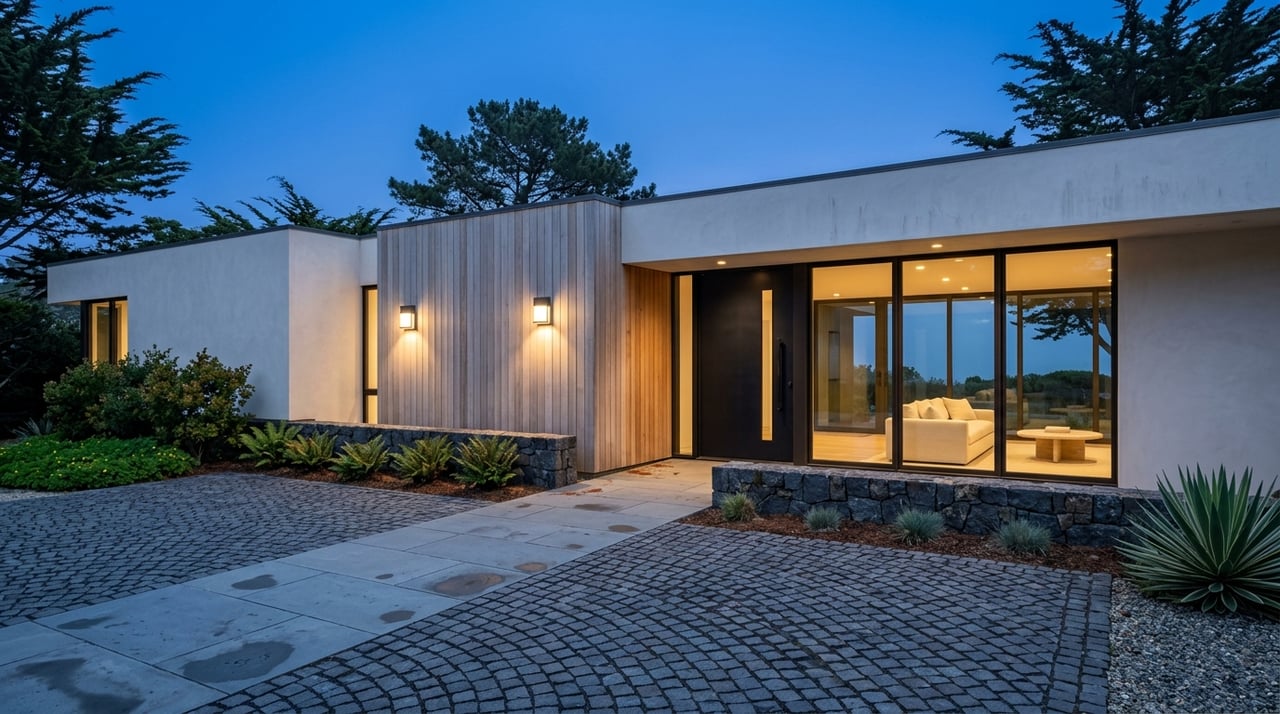
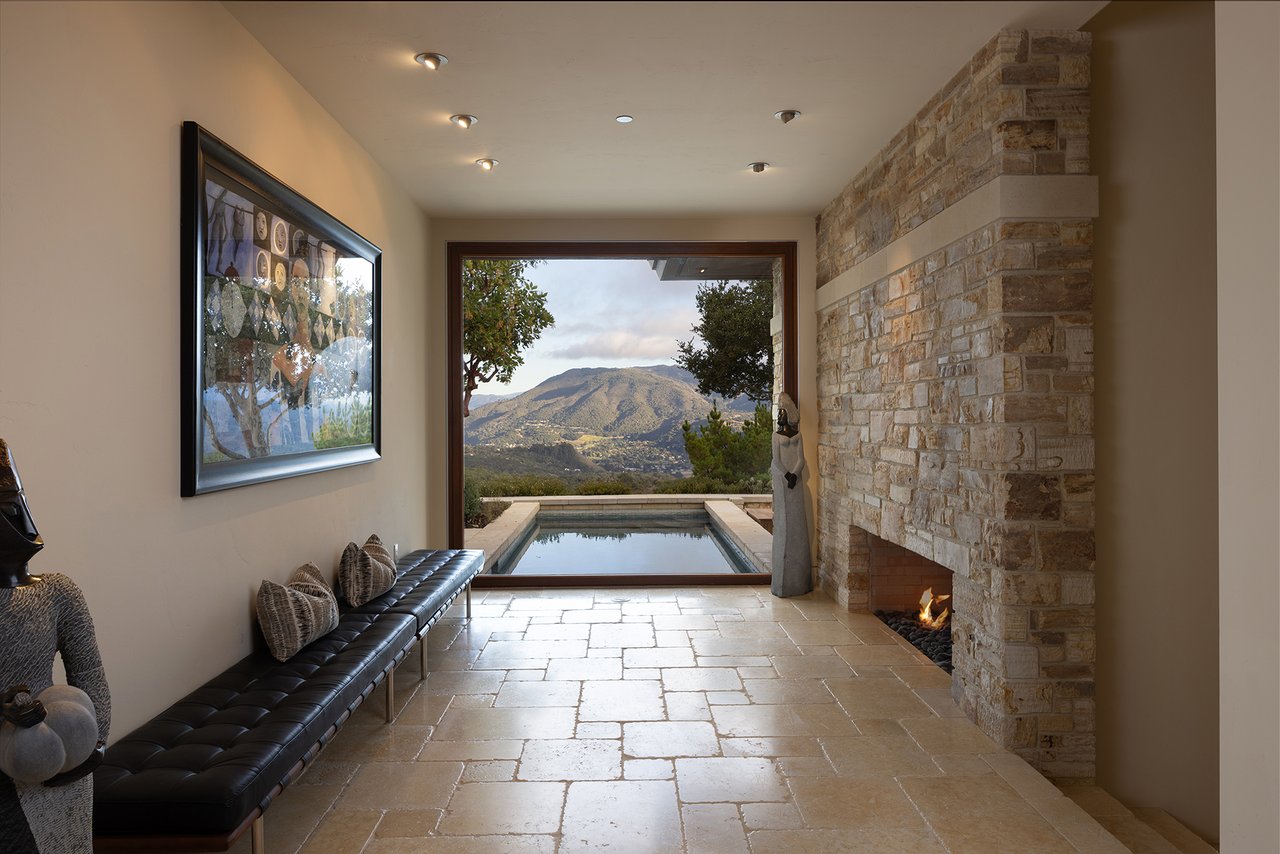
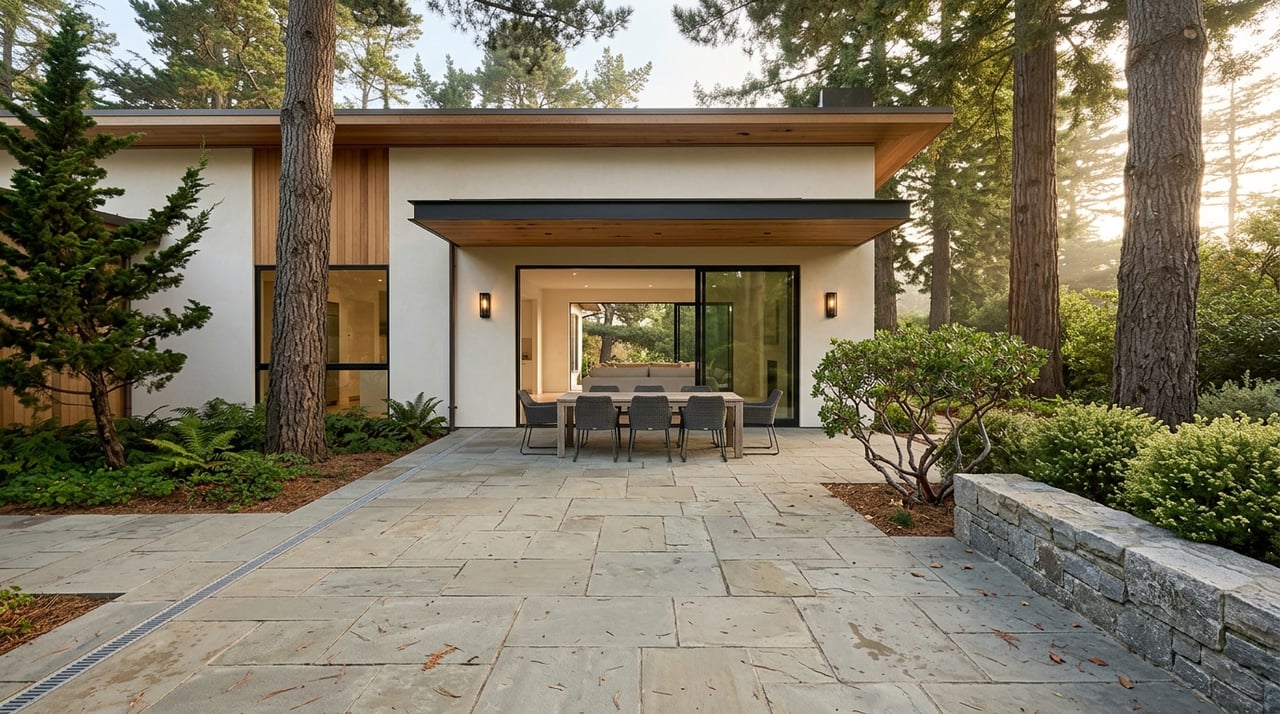
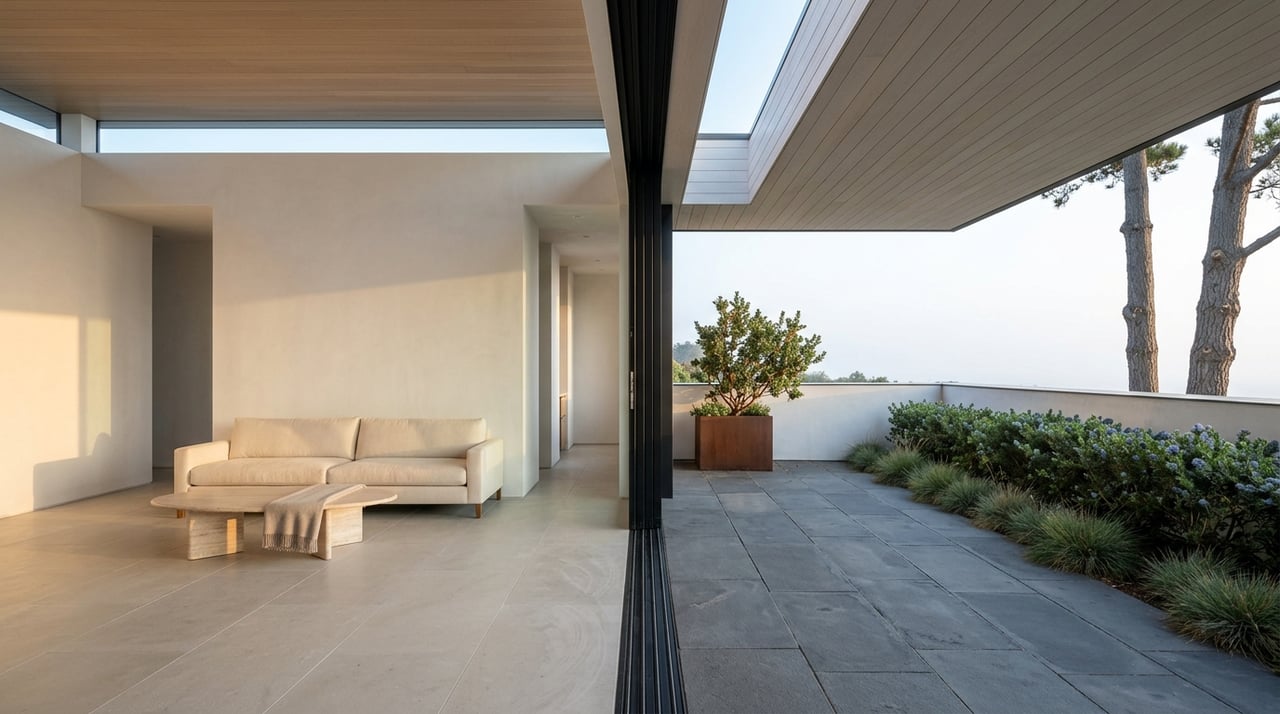
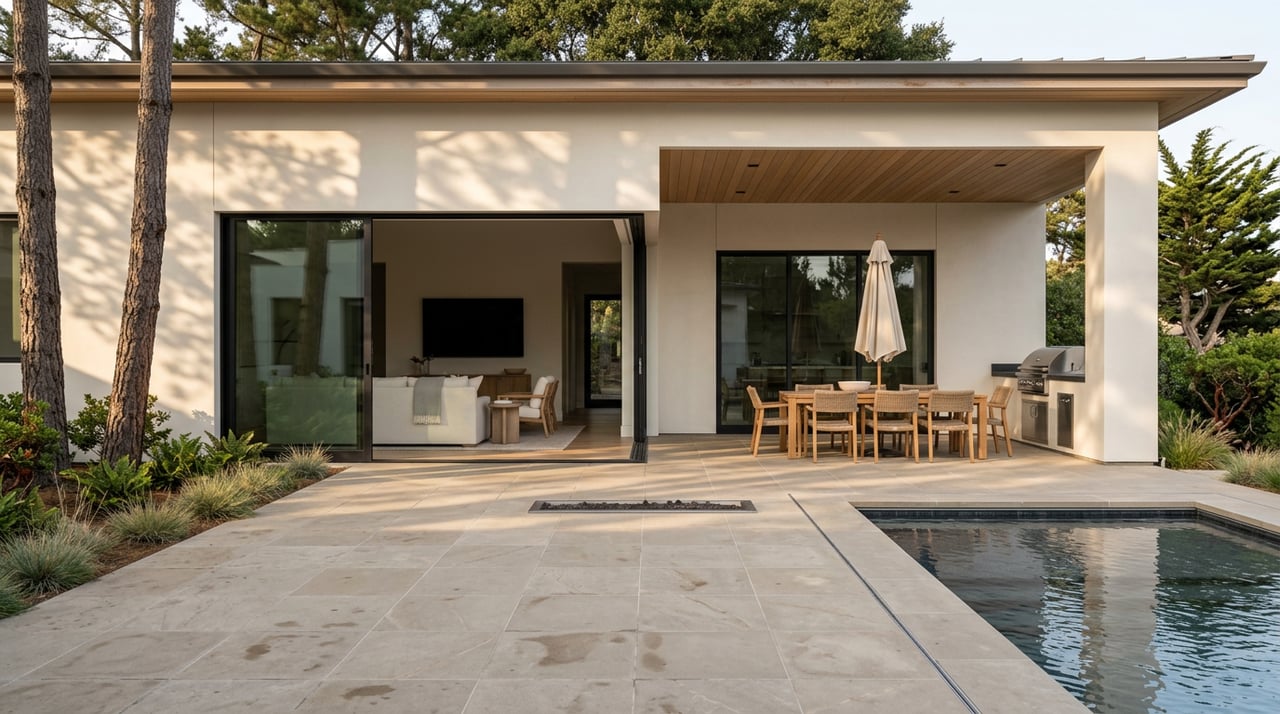
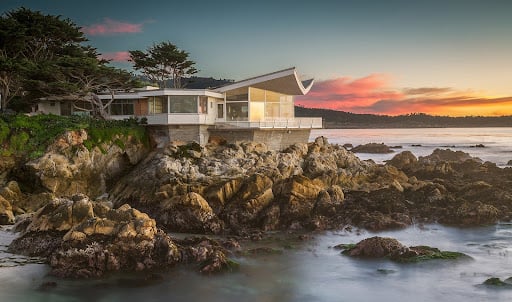
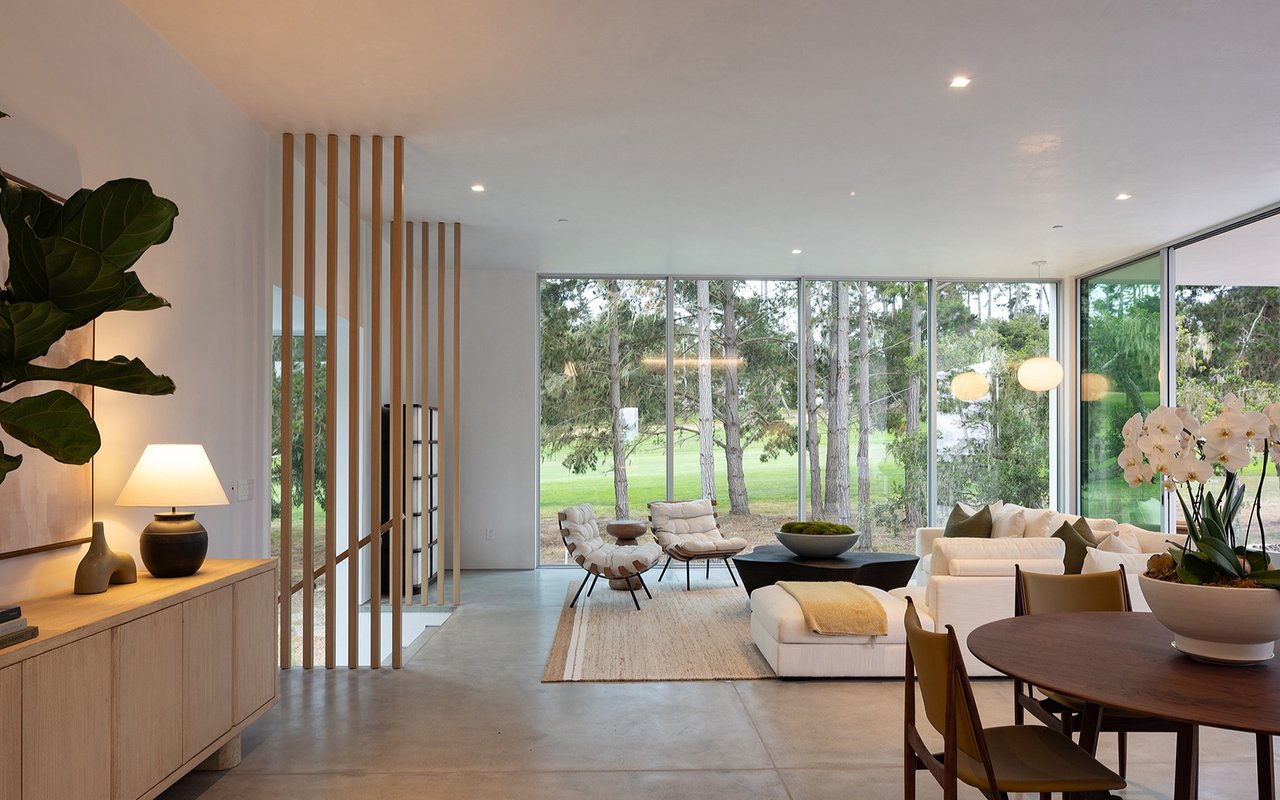
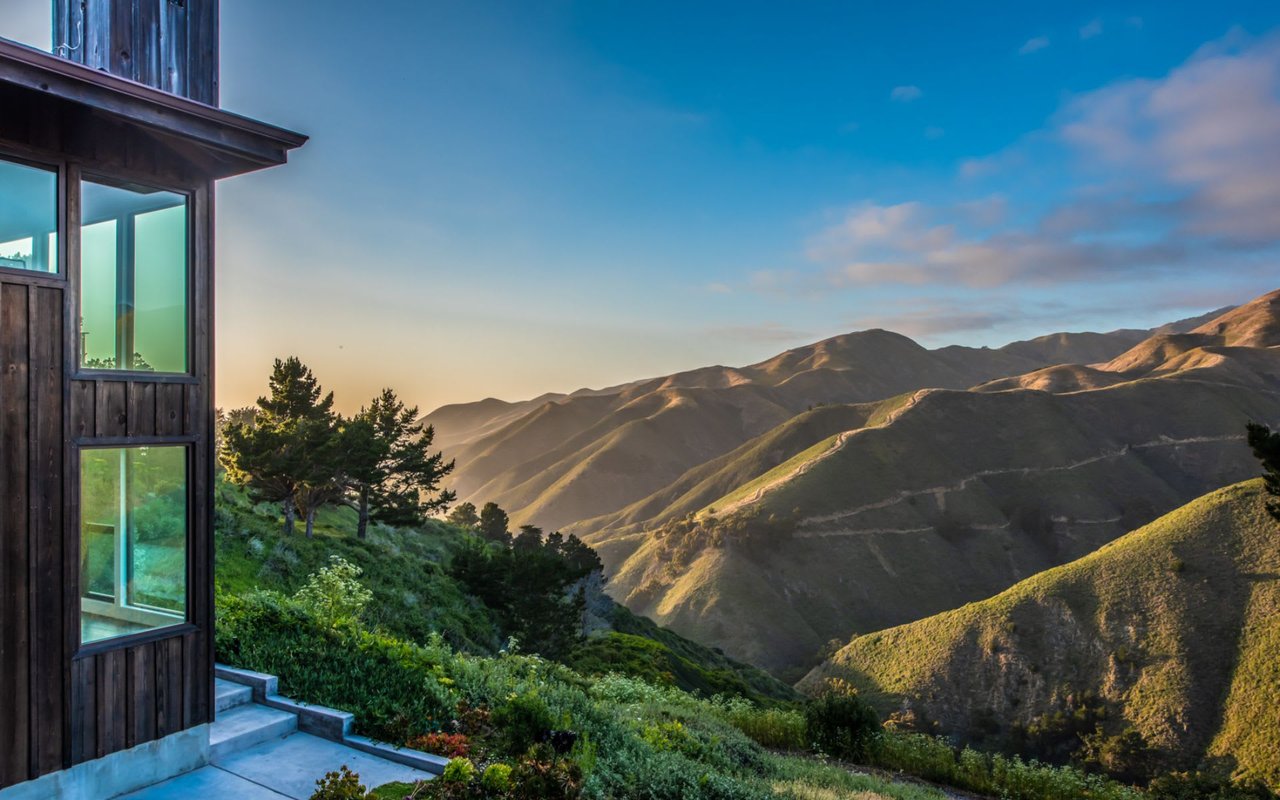
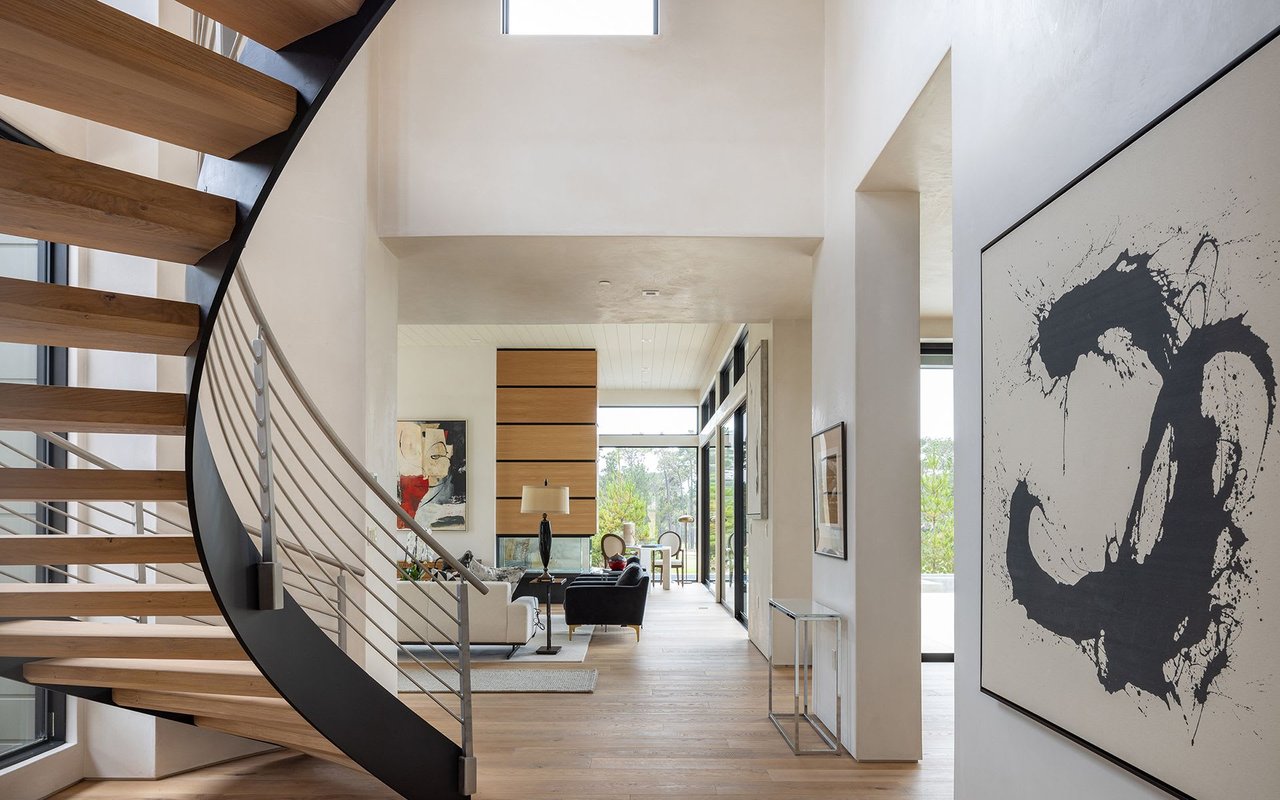
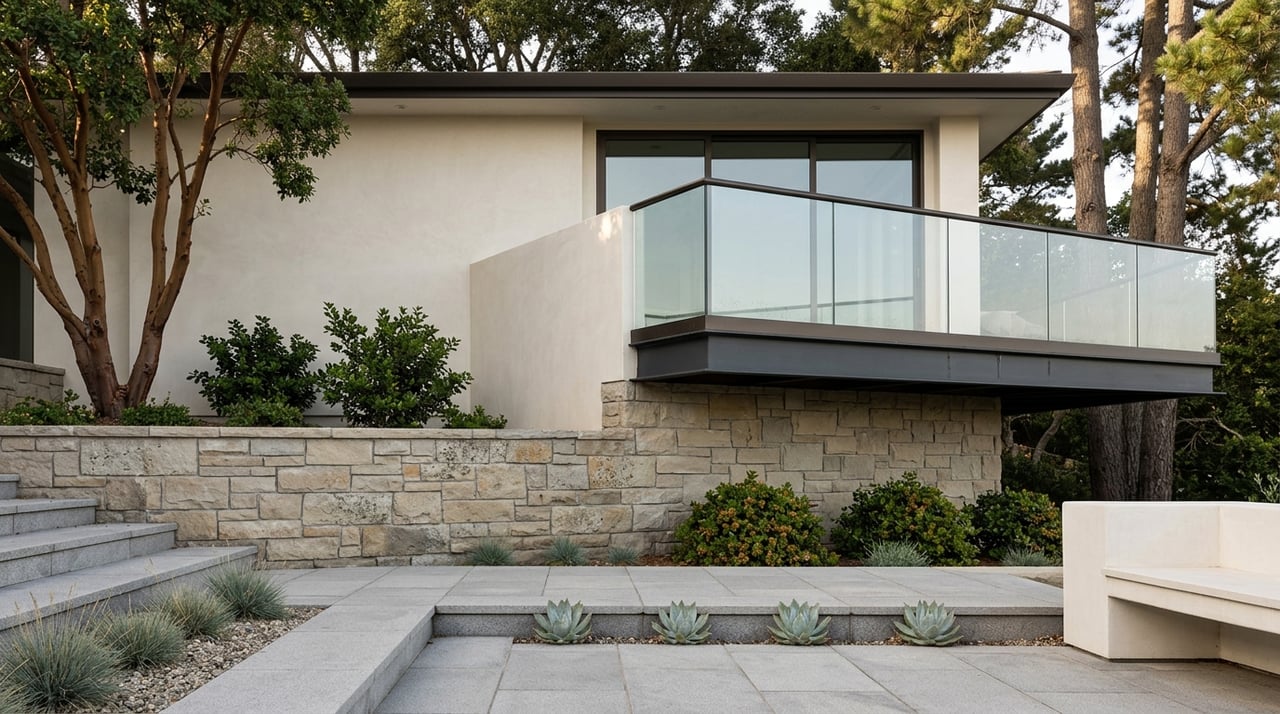
This is the style many people picture first when they imagine dramatic Carmel Highlands architecture. These homes often terrace into steep sites rather than sit visibly on top of them, creating a lower profile from the road while opening wide toward the ocean.
Notable local examples show the pattern clearly. Wallace Cunningham’s Serenity Residence uses glass walls and a stainless-steel roof enclosure, while Studio Schicketanz’s Carmel Highlands House embeds more than half of the structure into the slope. Other area examples step down multiple levels into the hillside, using green roofs, skylights, and outdoor living zones to reduce visual impact and maximize the setting.
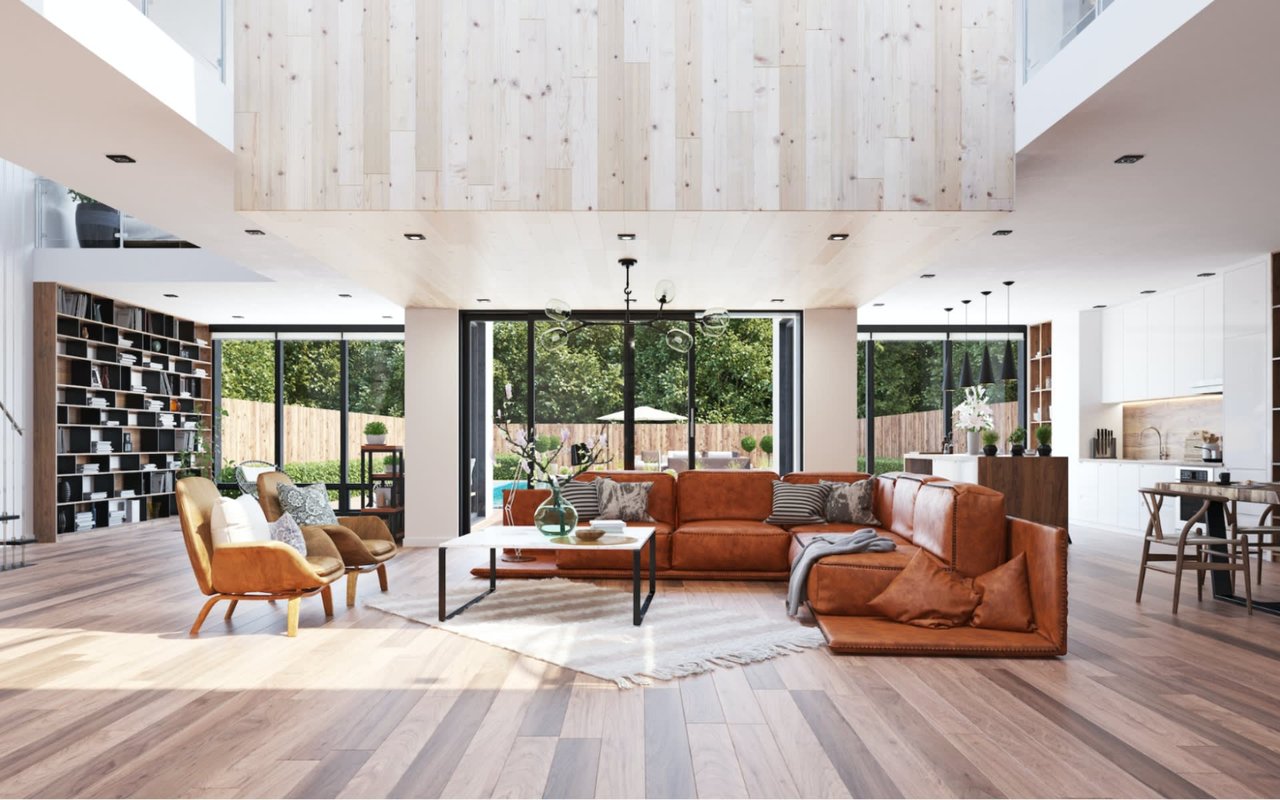
If you stay in a home like this, you can usually expect a strong sense of openness. Public rooms often connect directly to decks or terraces, and walls of glass are used to frame coastal views rather than separate you from them.
Rustic Coastal Lodges and Arts & Crafts Homes
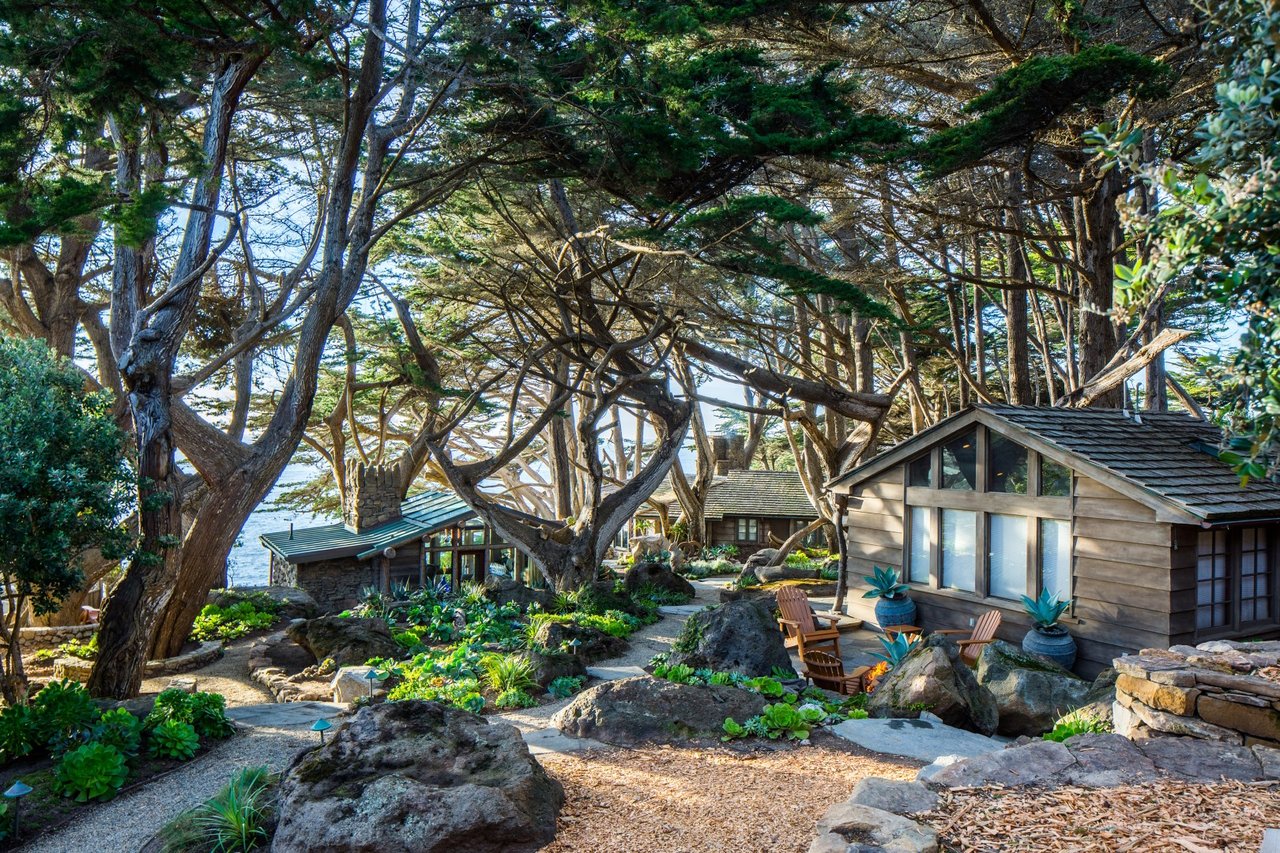
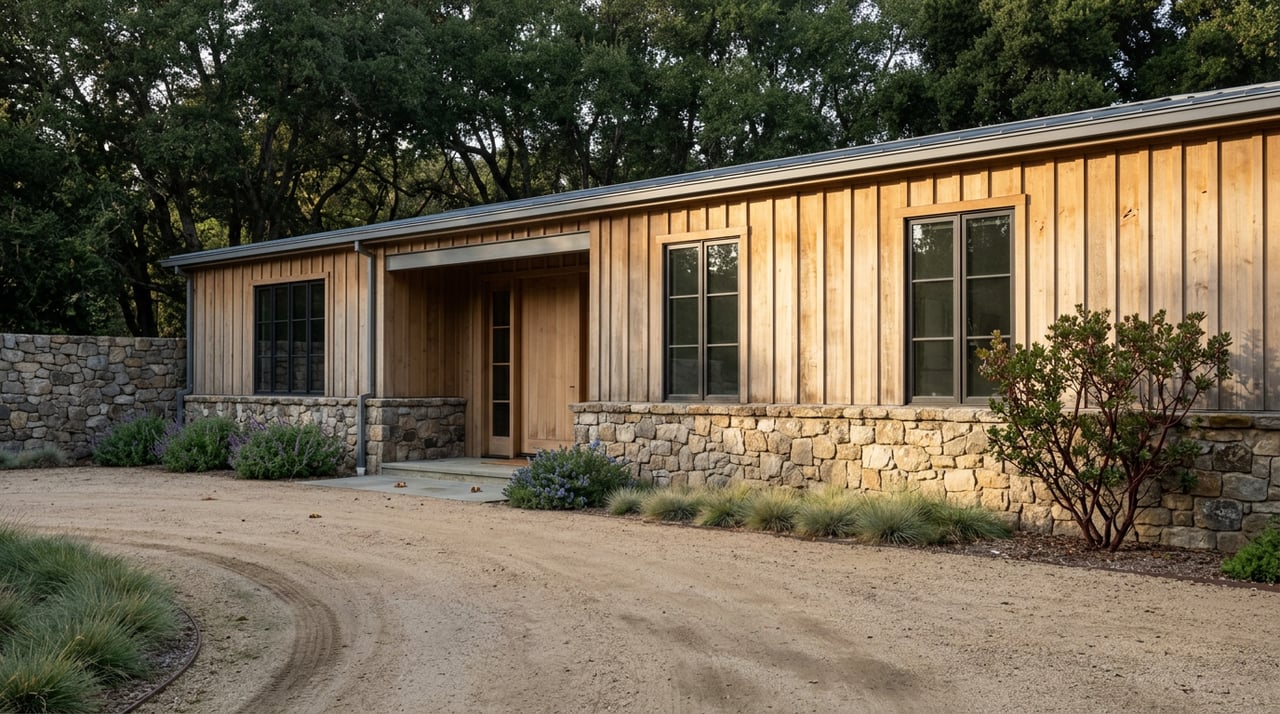
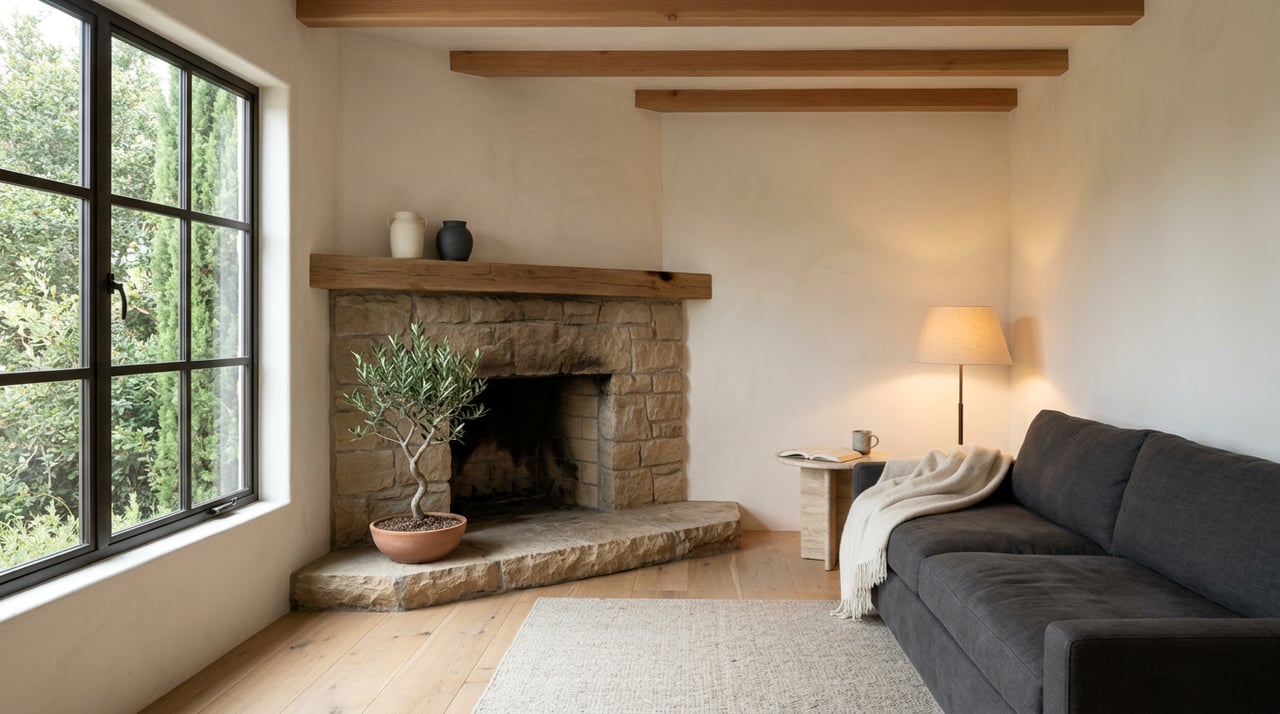
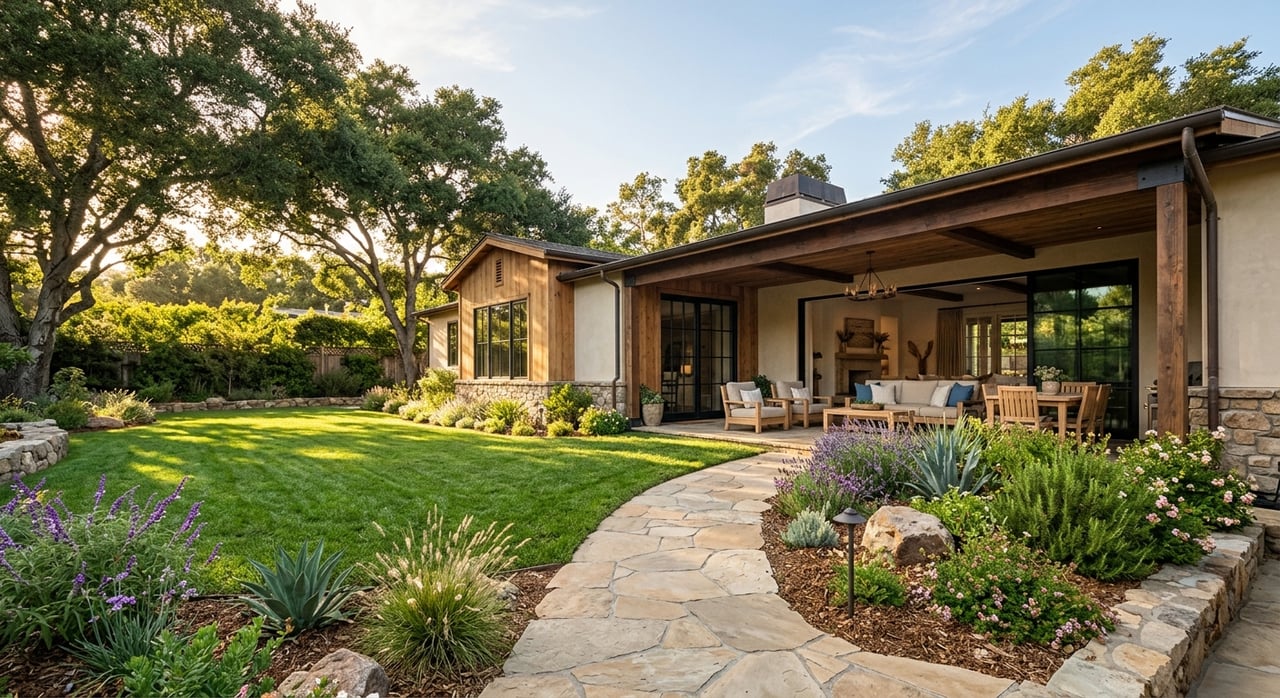
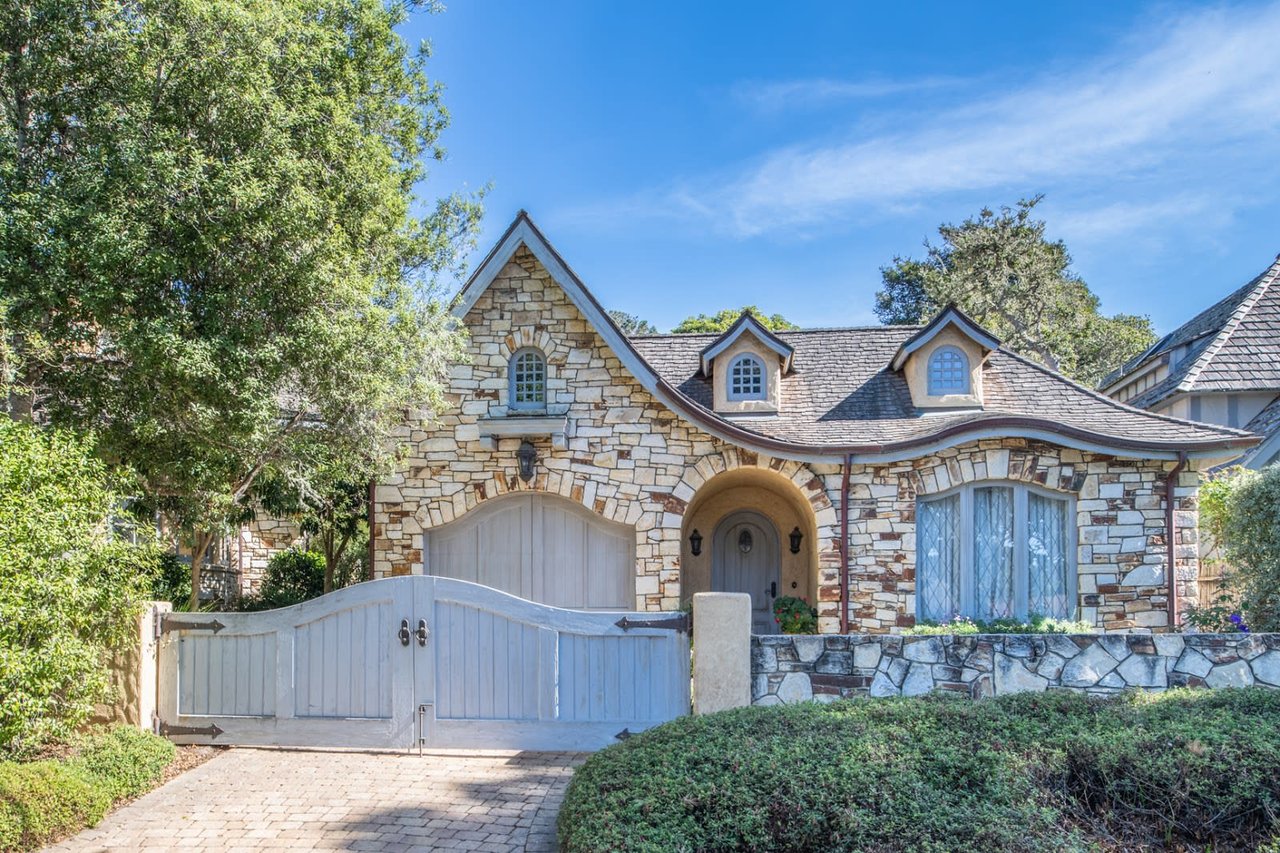
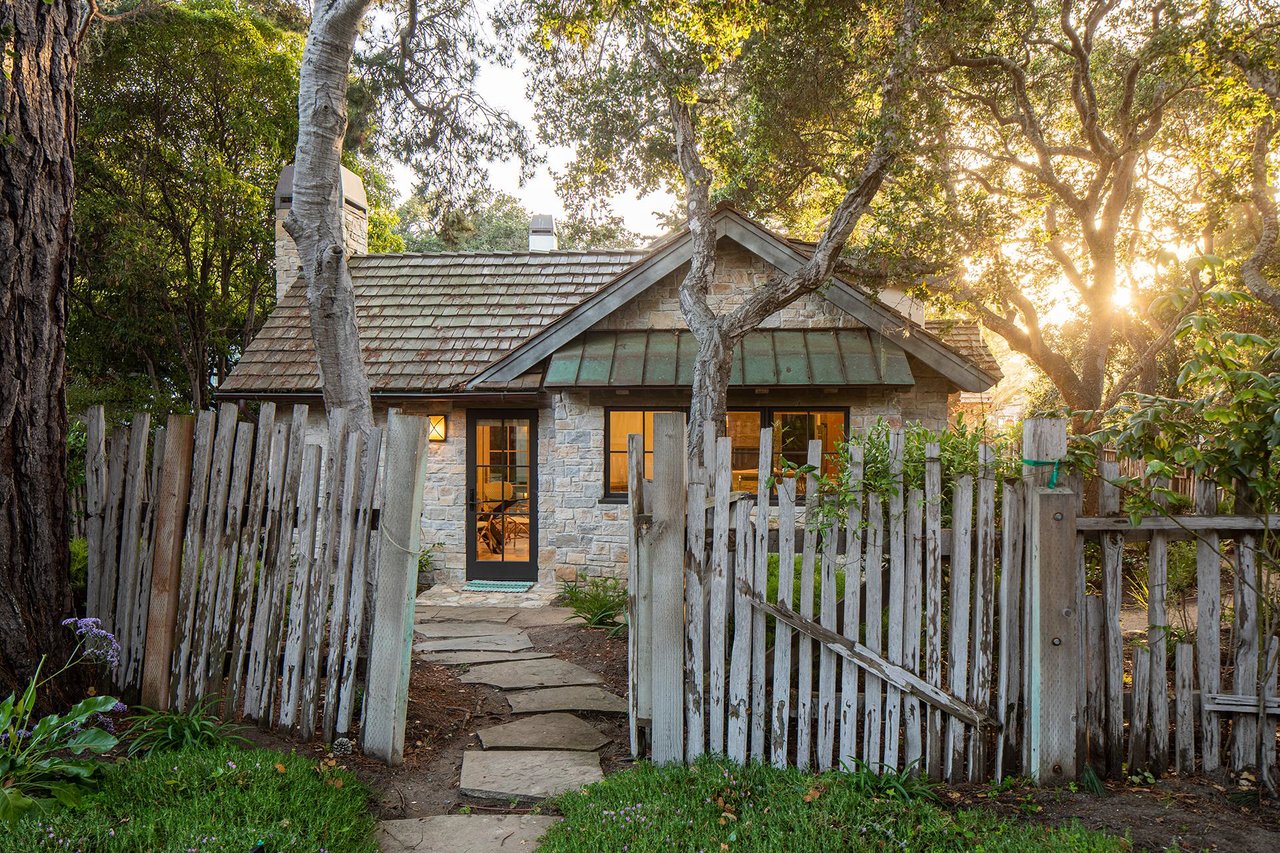
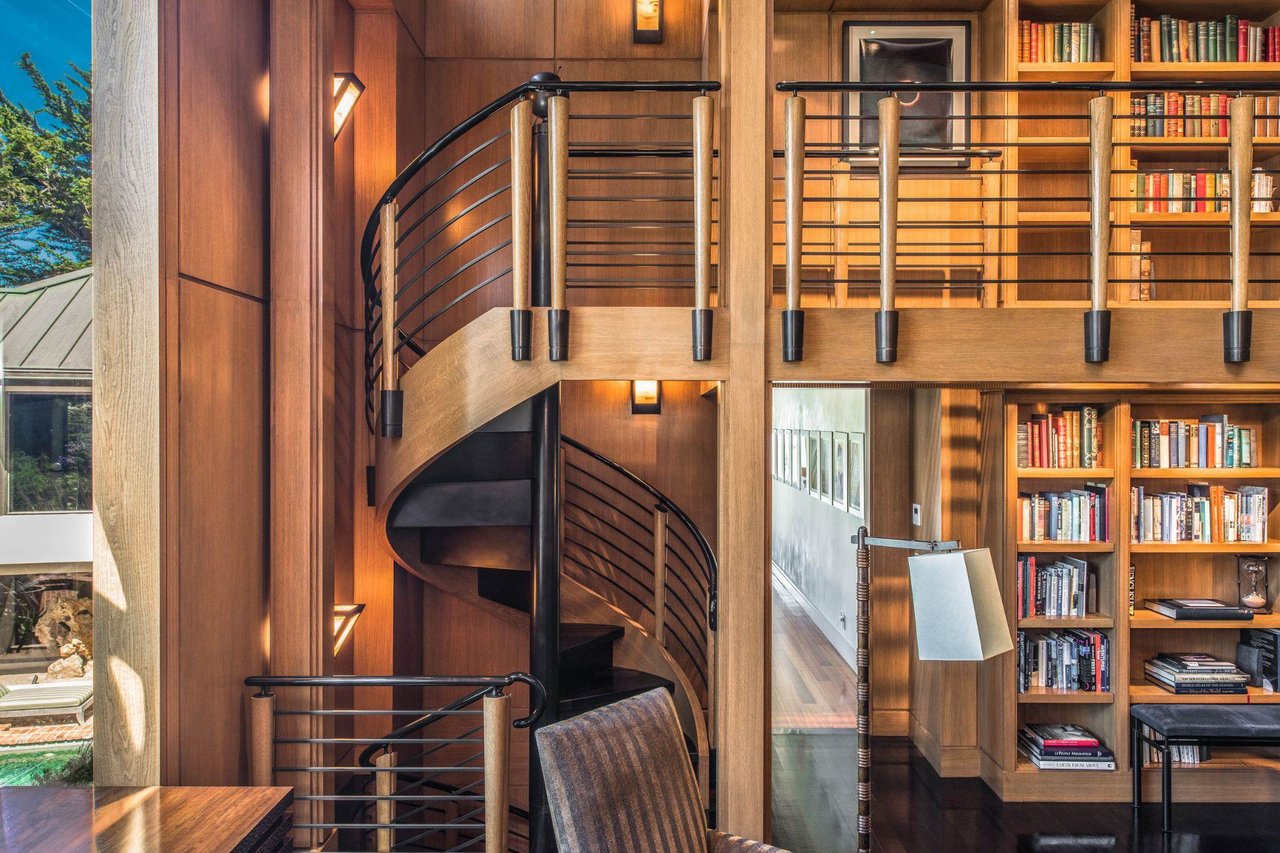
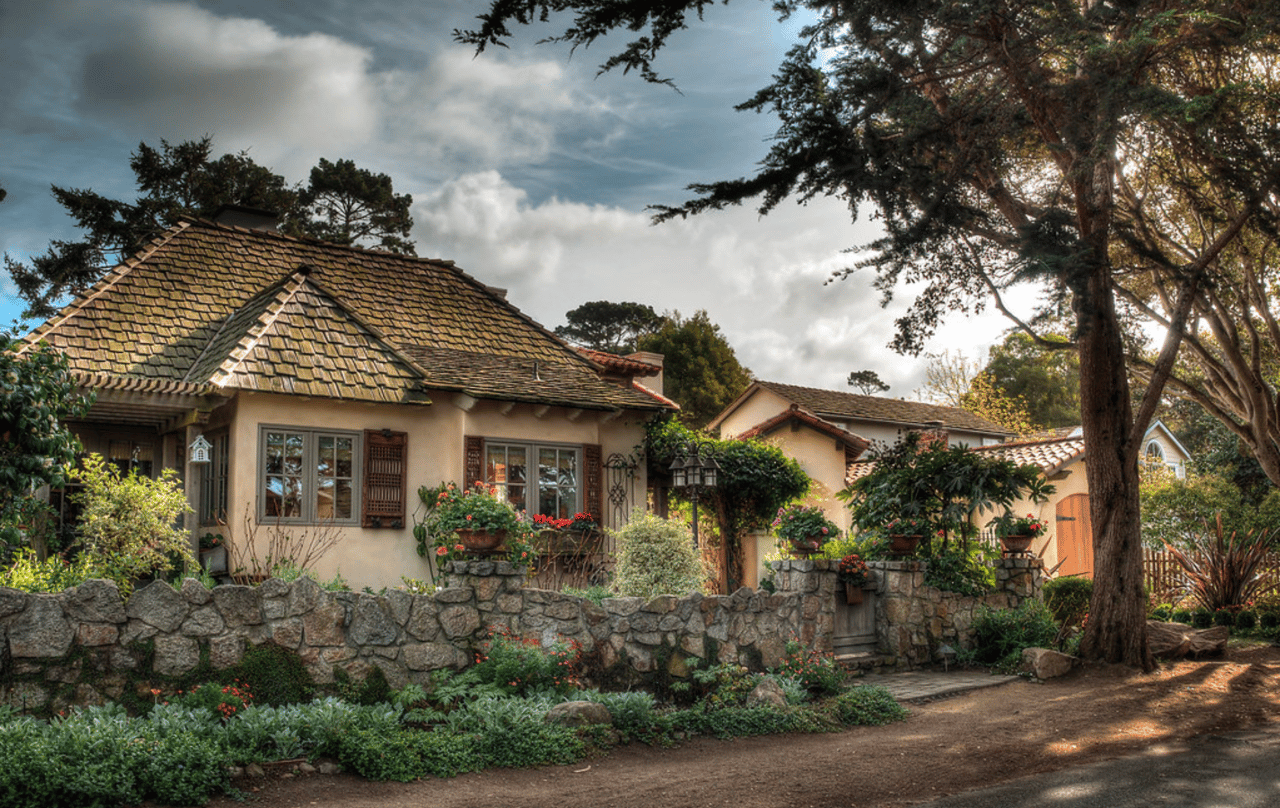
The rustic side of Carmel Highlands grows from the area’s early 20th-century identity. This style tends to feel warmer, more tactile, and more rooted in traditional coastal building, with an emphasis on wood, stone, fireplaces, and comfortable gathering spaces.
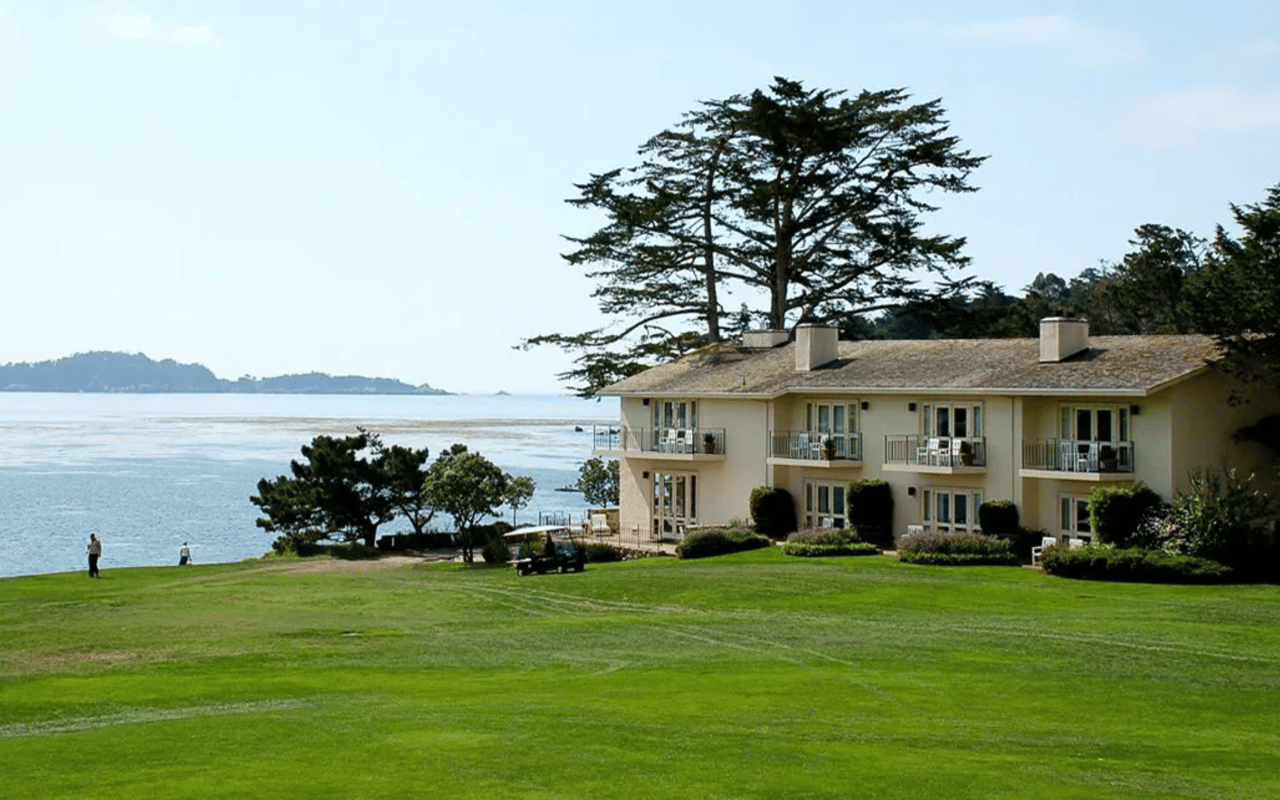
The historic Highlands Inn helps illustrate that heritage. The property dates to 1917 and still emphasizes early architectural elements and ocean-facing hospitality, while its residential-style villas include features such as full kitchens, fireplaces, and private balconies.
In residential settings, this style often translates into homes that feel intimate even at a large scale. You may see timber details, lodge-like rooms, stone surfaces, and floor plans designed around shared living rather than formal display.
Shingled Coastal Forms
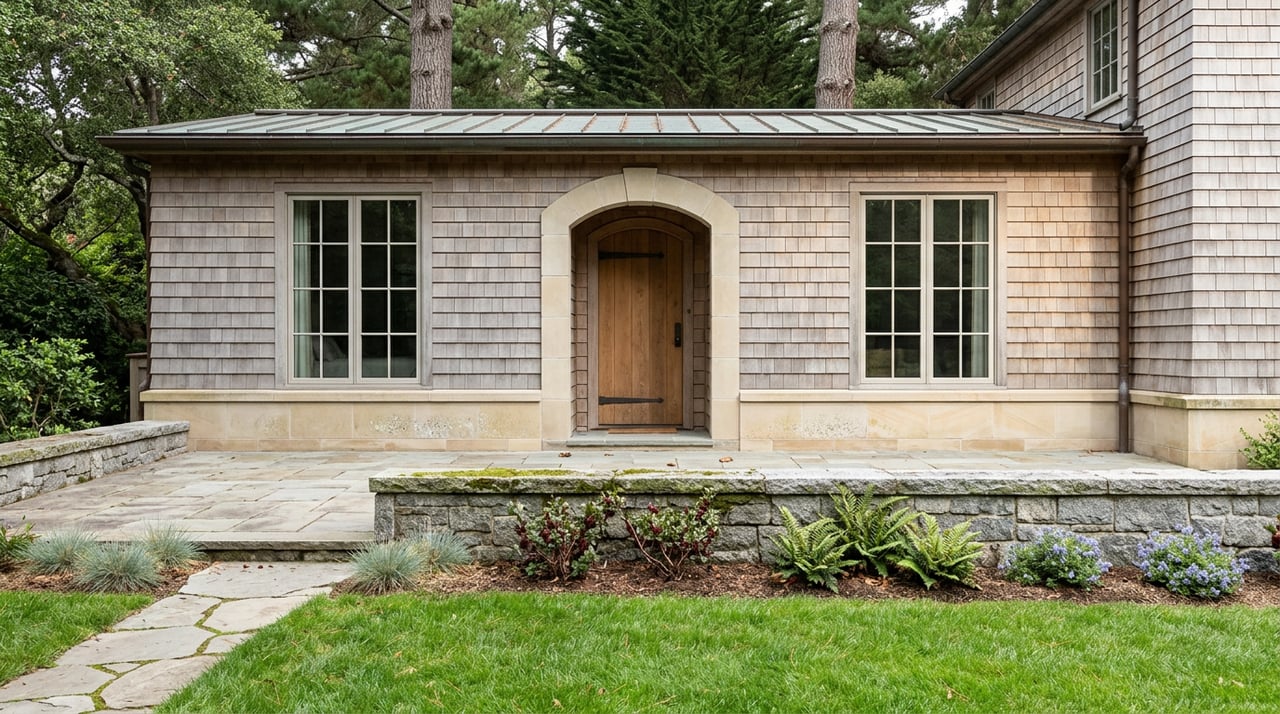
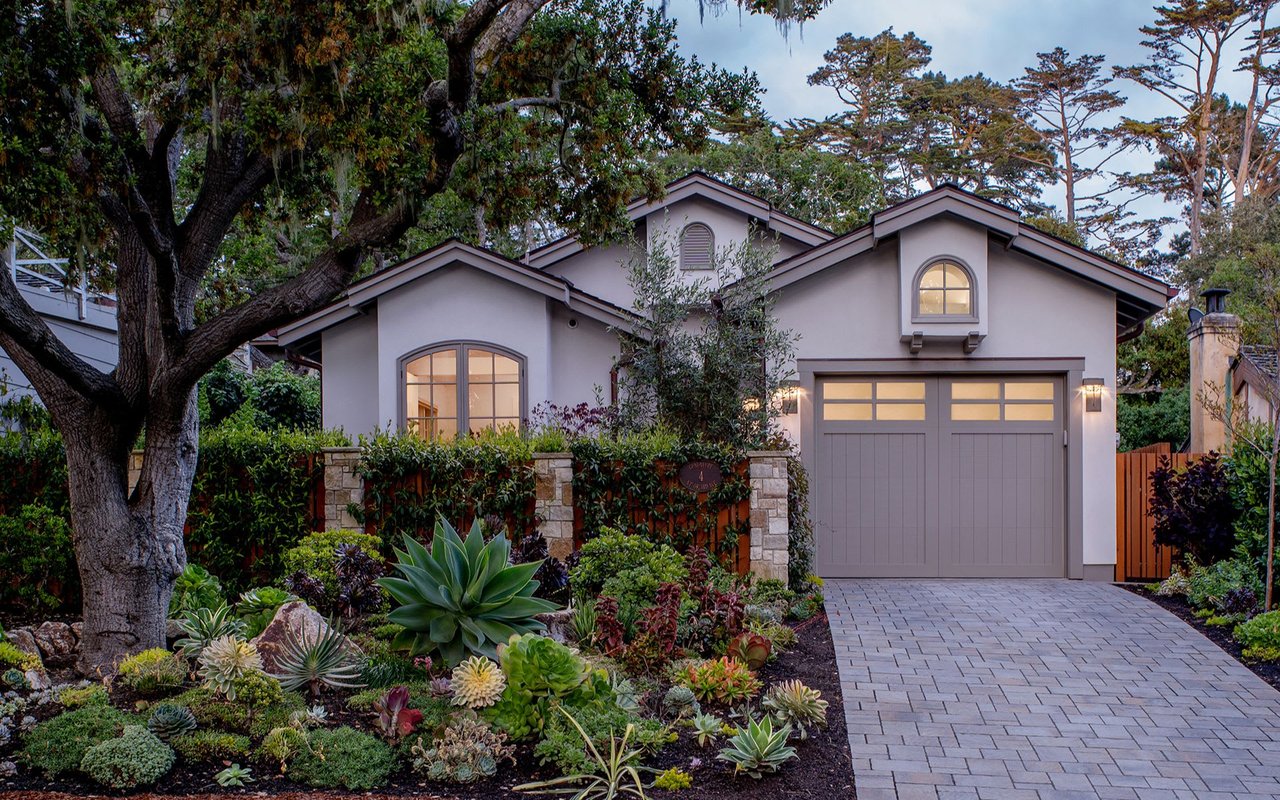
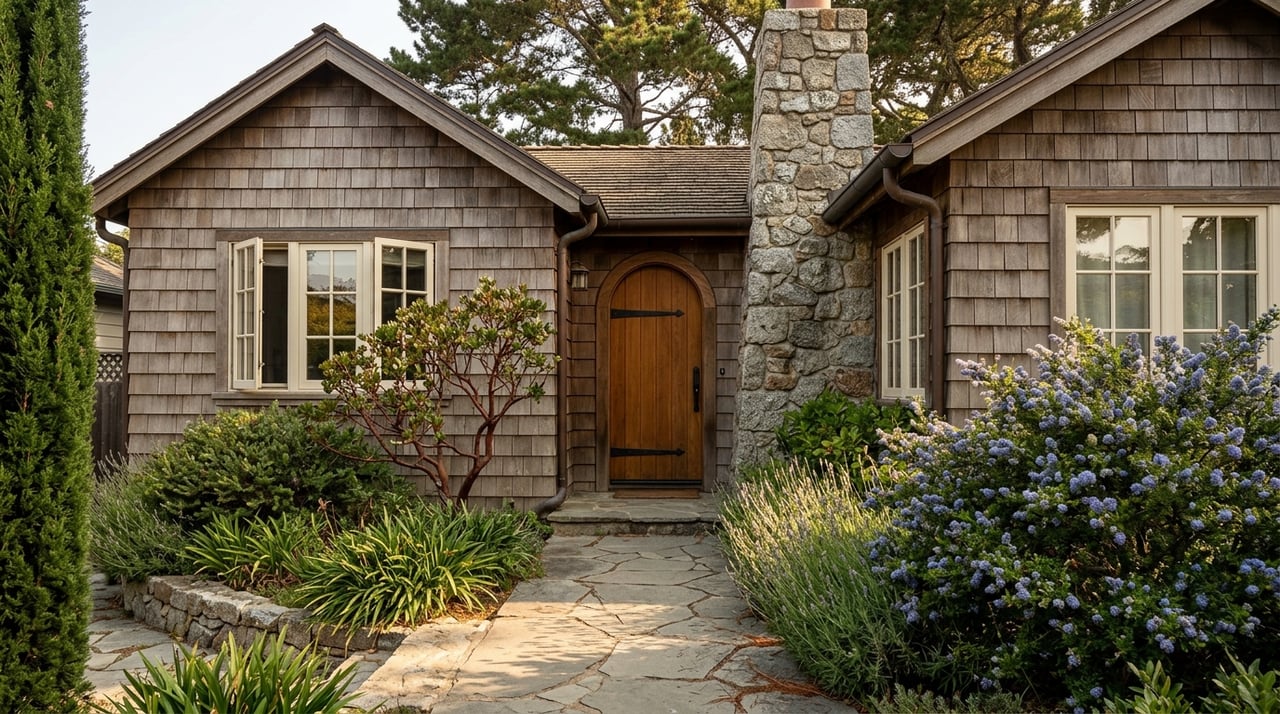
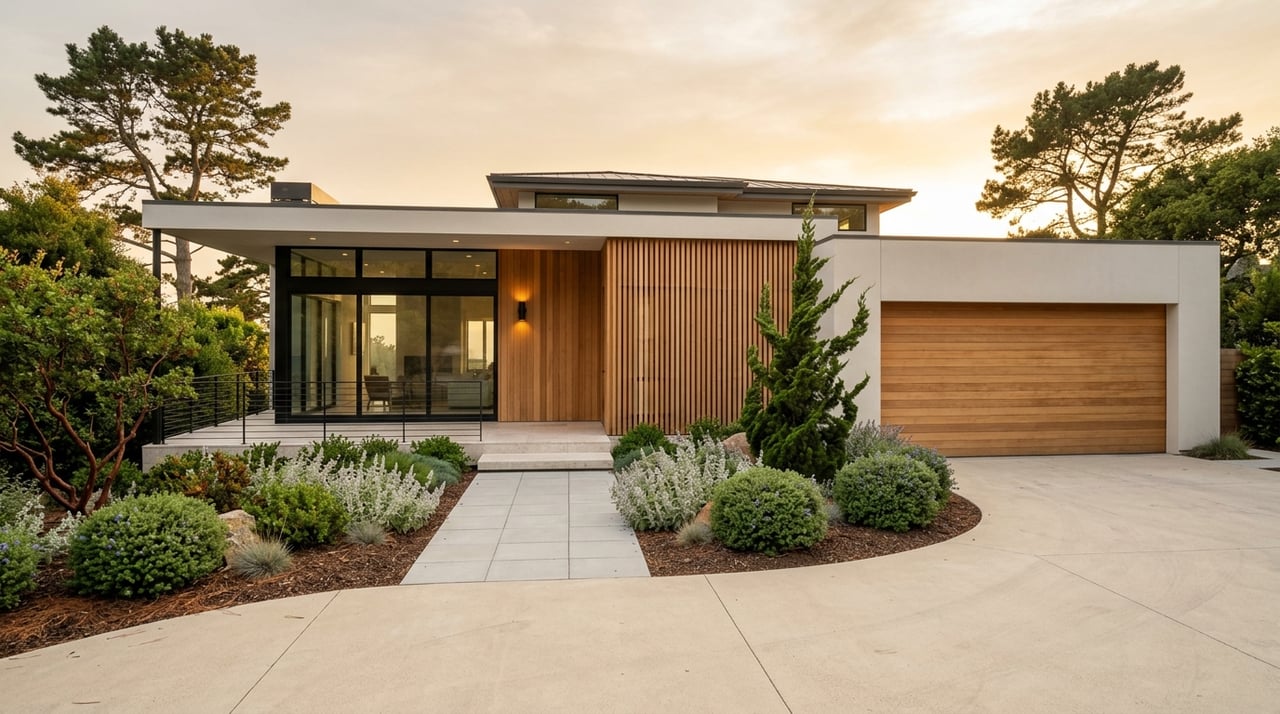
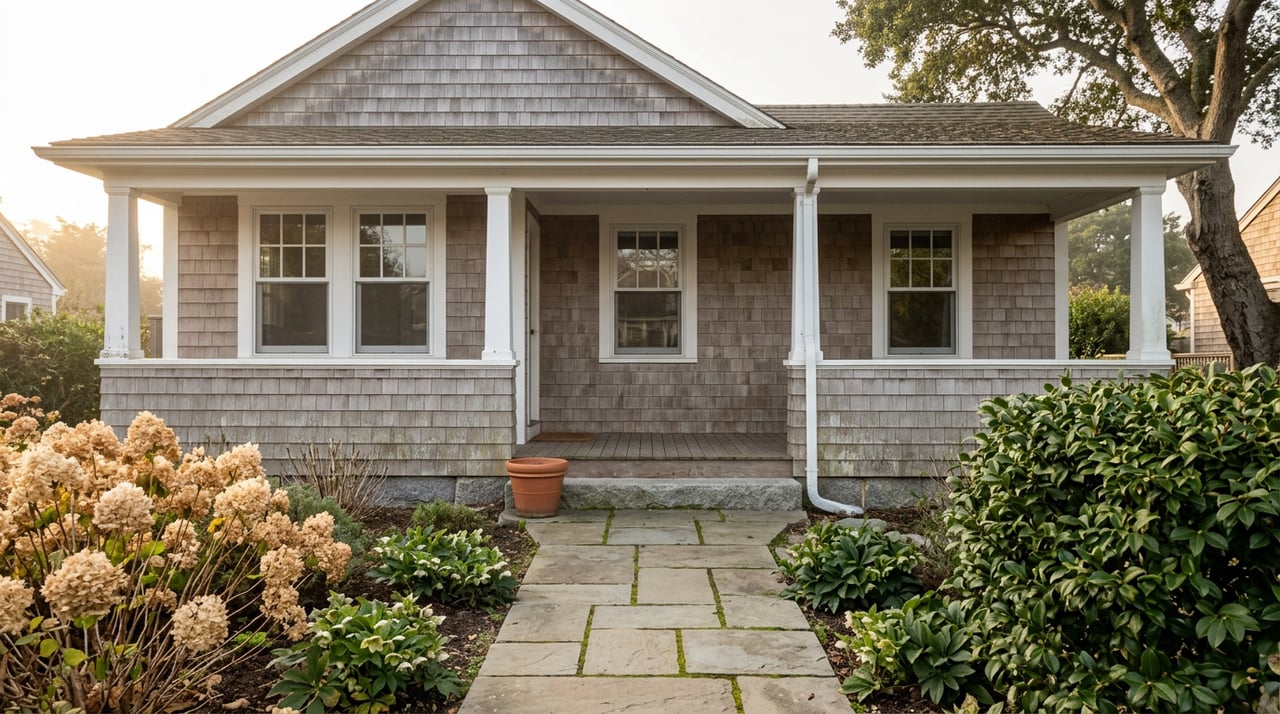
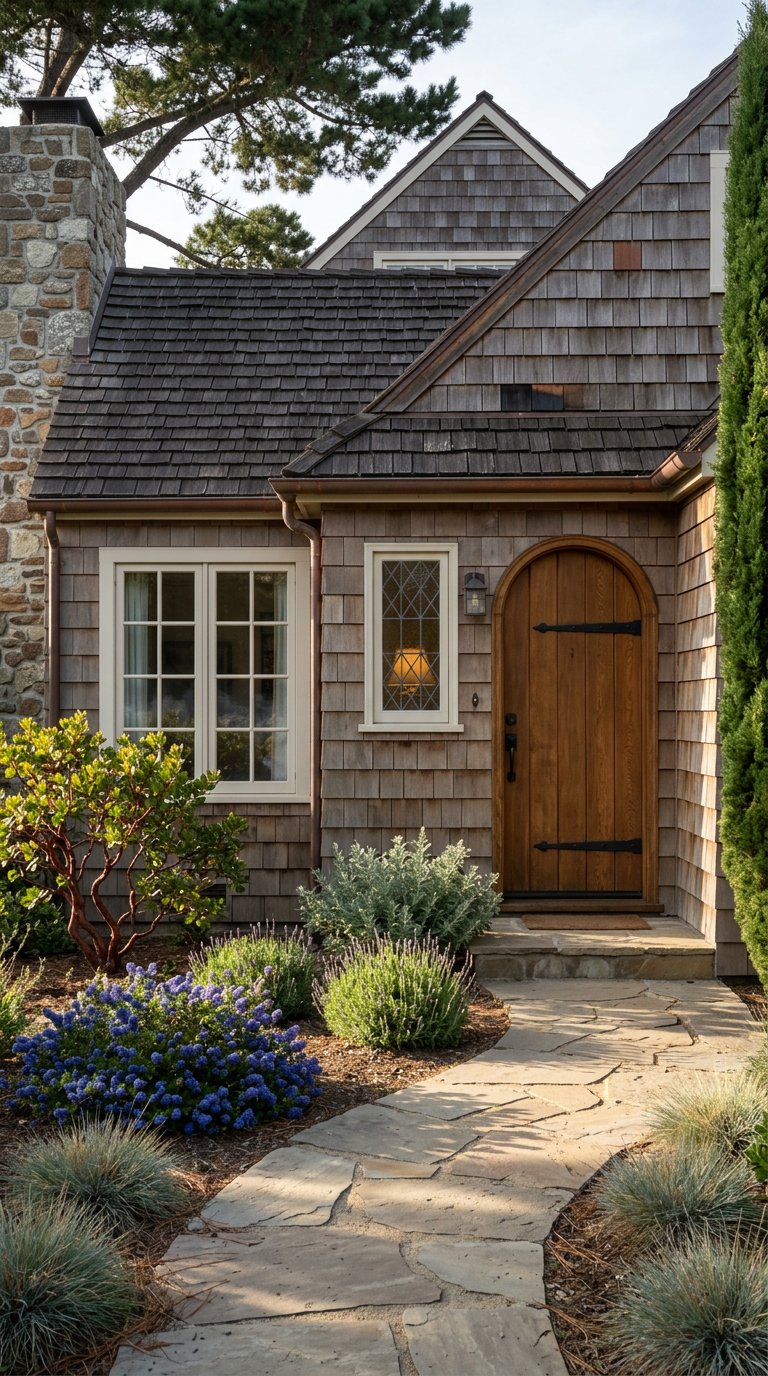
The third key style is the classic shingled coastal home. In the broader Carmel design vocabulary, Bay Region Modern and related coastal forms often combine shingle cladding, local stone, plate-glass window walls, skylights, low-pitched roofs, terraces, decks, and garden courts.
This style works especially well in Carmel Highlands because it visually softens large homes. County-approved projects in the Carmel area continue to use stained redwood shingle siding and board-and-batten treatments to blend with the natural setting.
For you, the appeal of this style is balance. It can feel classic and coastal, yet still open and contemporary inside, especially when paired with large windows, layered outdoor spaces, and restrained natural finishes.
Why Site-Led Design Matters Most
In Carmel Highlands, style labels only tell part of the story. The more important idea is that luxury architecture here is site-led. Homes are shaped by grade changes, access constraints, views, weather exposure, and the need to remain visually quiet in the landscape.
That is why many homes are multi-level or terraced. A house may place garages or utility areas lower on the slope, main living spaces toward the view, and bedrooms above or beside those public rooms for privacy and separation.
This approach is also practical. County review commonly addresses steep slopes, narrow access, retaining walls, setback parking, and bluff-related constraints, all of which influence how a luxury home is planned and experienced.
What Luxury Floor Plans Often Include
If you are considering a Carmel Highlands rental, the layout may feel different from a flatter coastal market. Here, floor plans are often driven by elevation changes and the effort to capture light, shelter, and views from multiple levels.
Common plan features include:
- Multi-level or terraced living spaces
- Main gathering rooms oriented toward ocean or landscape views
- Private bedroom wings placed above, below, or beside the main living areas
- Guest rooms or detached guest accommodations in some properties
- Lower-level garages, storage, or utility zones adapted to the slope
These homes are often designed for both privacy and entertaining. Even when a property has a dramatic architectural presence, the interior flow usually prioritizes comfort, circulation, and connection to the outdoors.
Indoor-Outdoor Living Is the Baseline
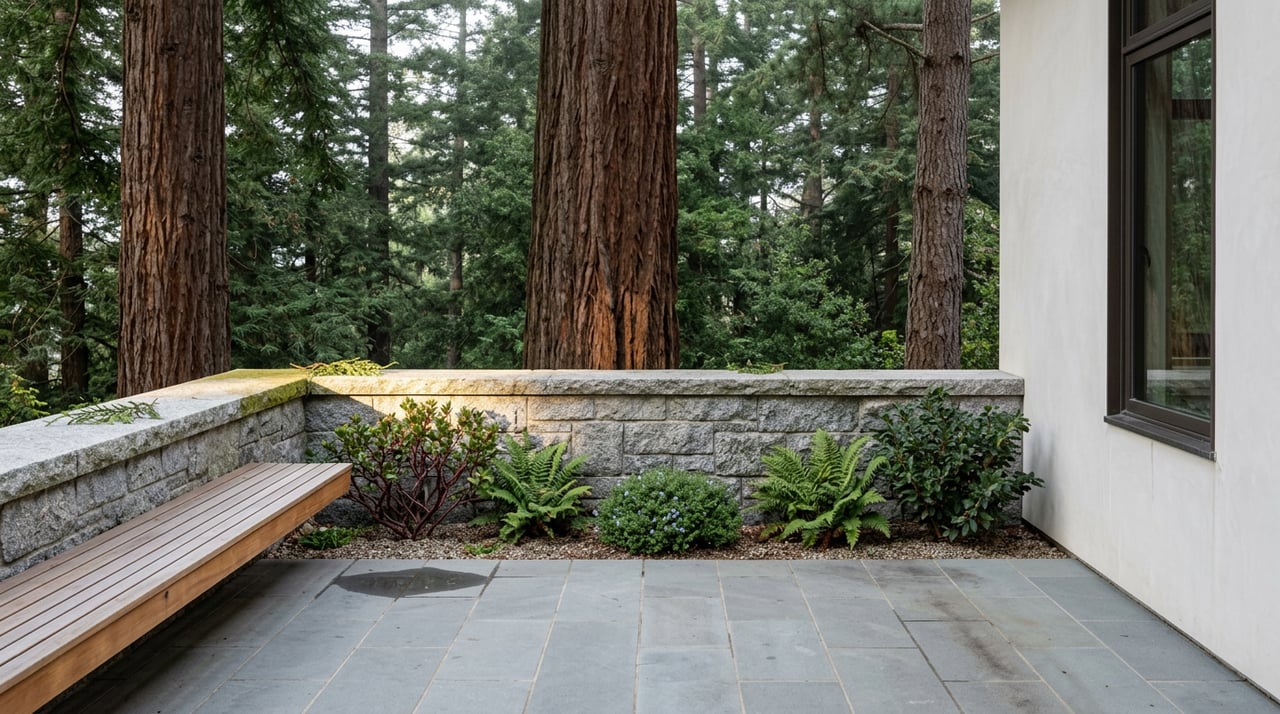
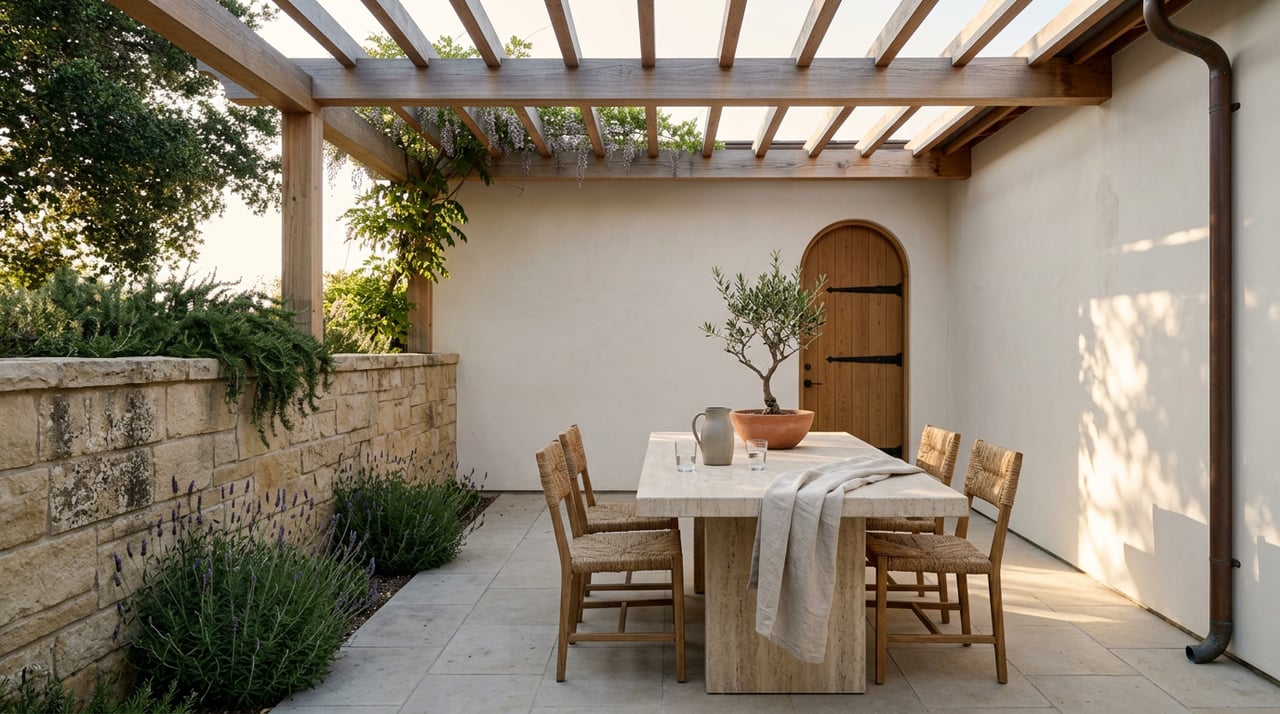
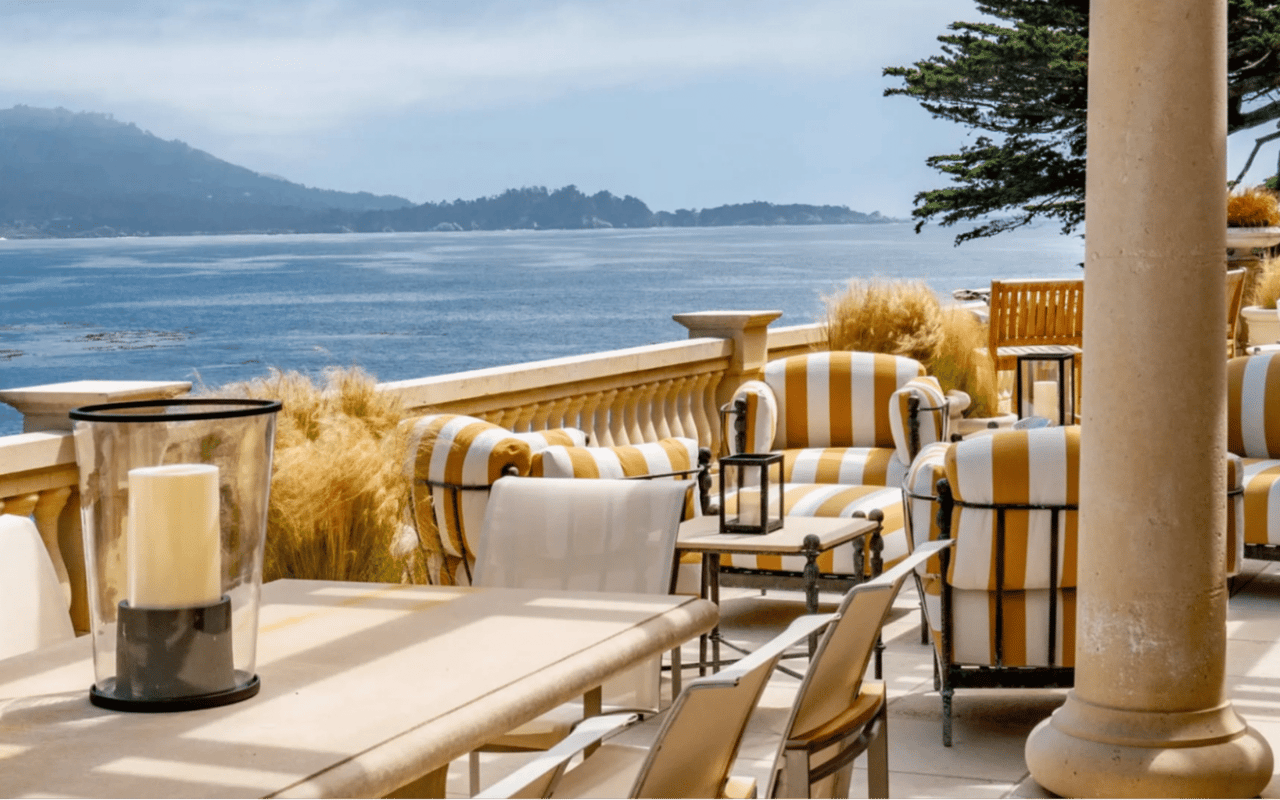
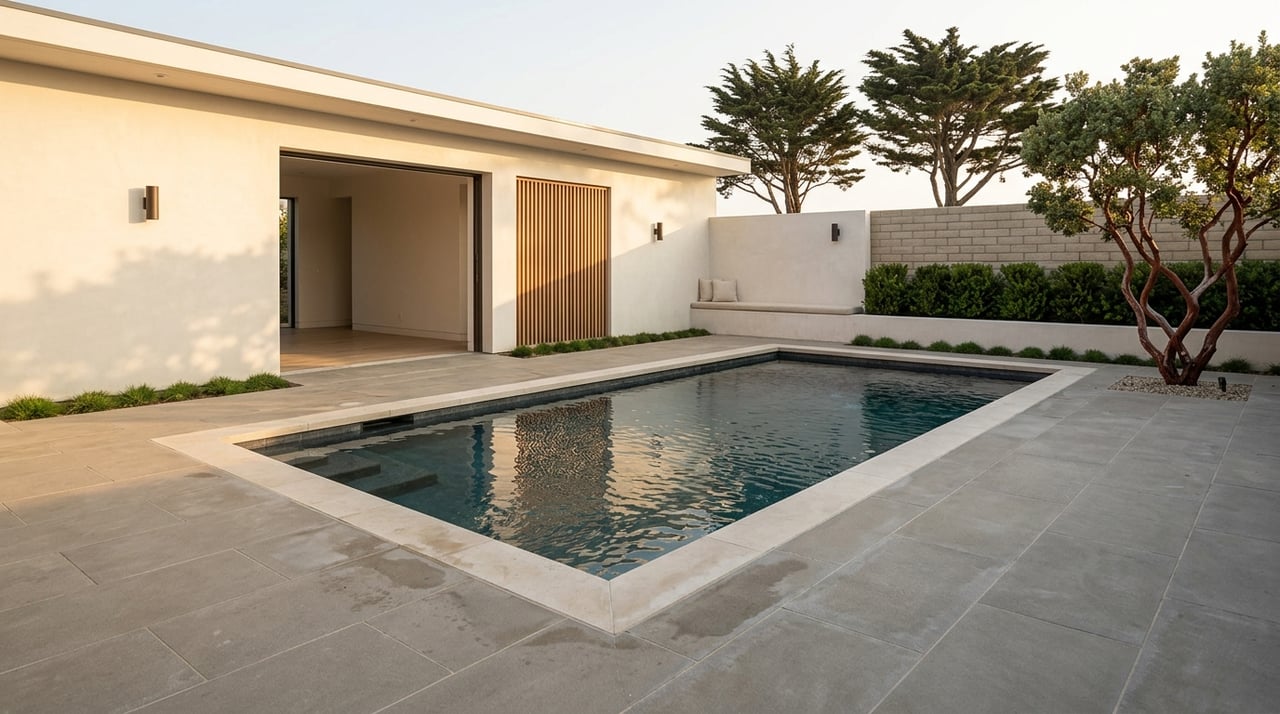
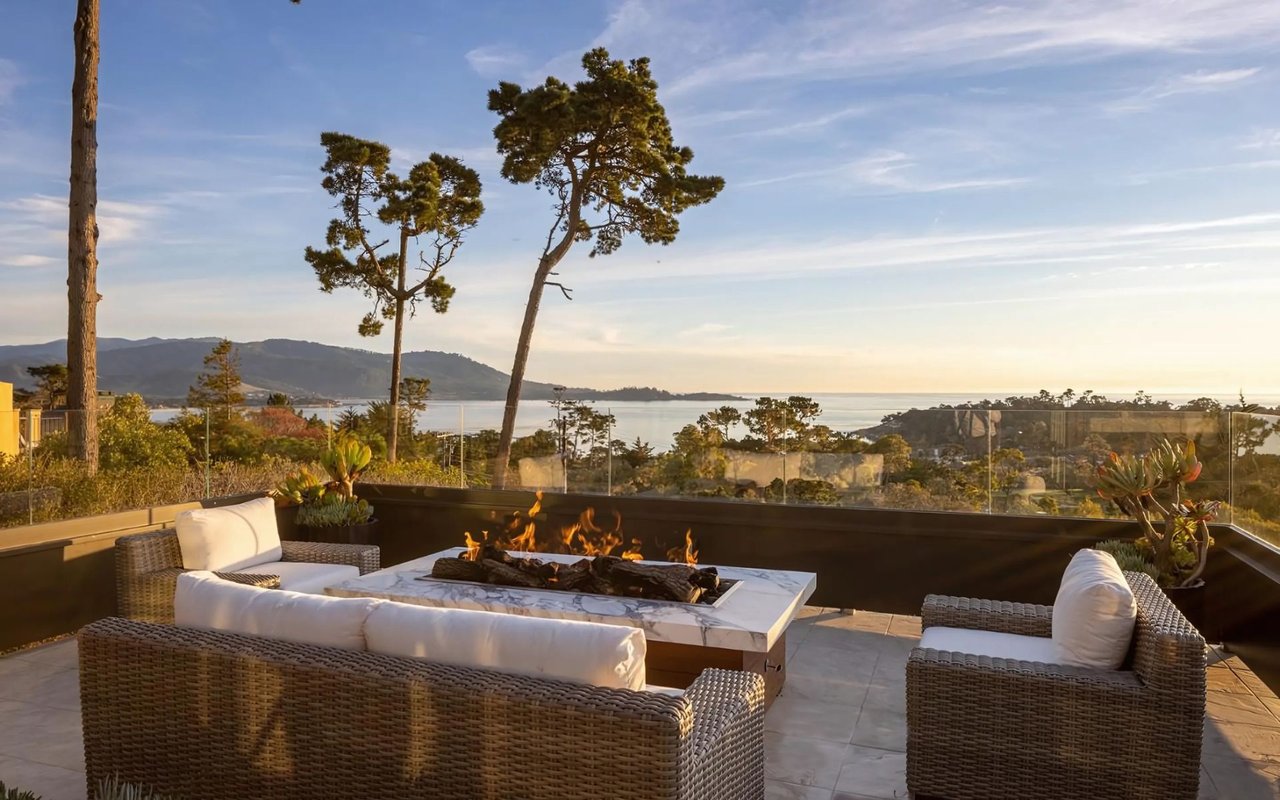
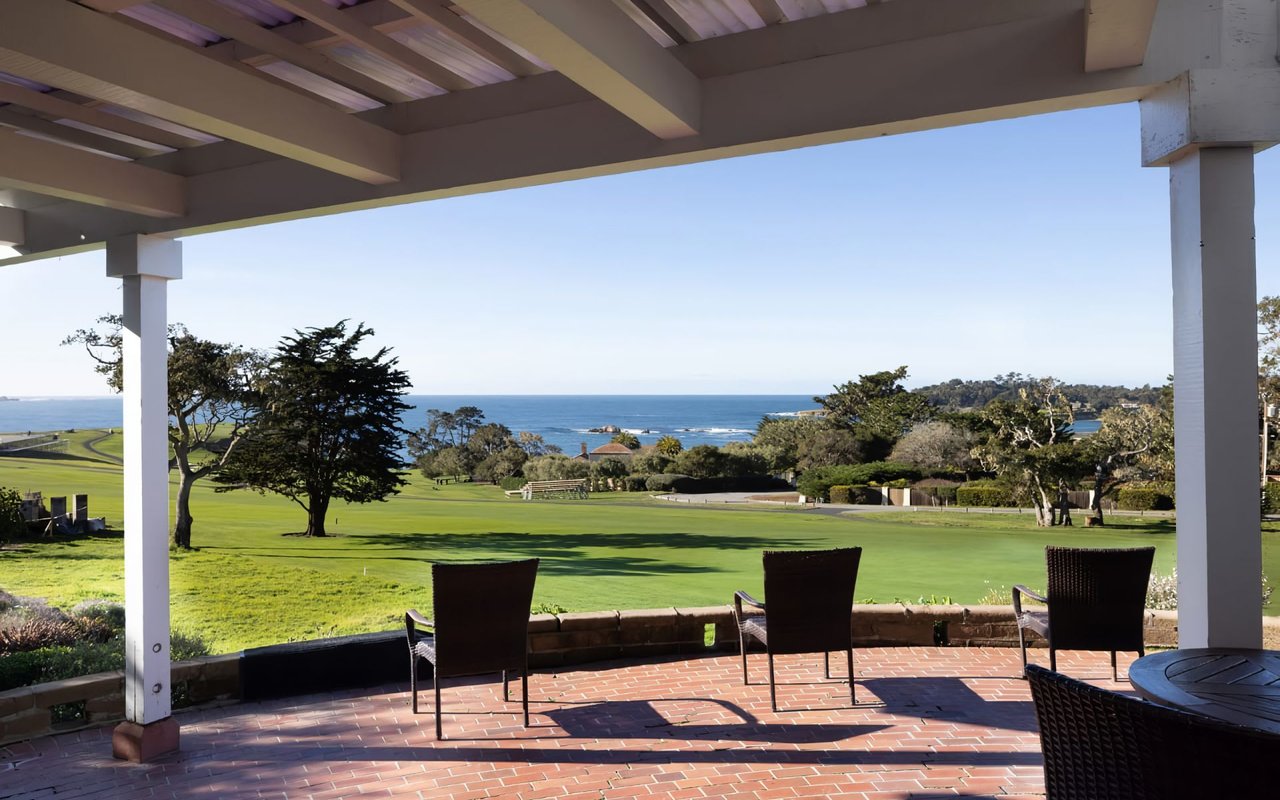
In Carmel Highlands, indoor-outdoor living is not a bonus feature. It is a core design strategy. Homes in the area frequently use decks, balconies, patios, courtyards, skylights, large glass sliders, and open-plan living rooms to draw the landscape into daily life.
That matters whether you are planning a short coastal stay or a longer seasonal lease. A home may offer broad patios for gathering, a living room that opens directly toward the bluff or forest, or separated guest quarters that support privacy for extended stays.
The result is a style of living that feels flexible and place-specific. Luxury here often means being able to move easily between sheltered interiors and open-air spaces throughout the day.
Coastal Climate Shapes Comfort
The local climate also helps explain why Carmel Highlands homes are designed the way they are. NOAA engineering weather data for Monterey shows moderate coastal design temperatures and prevailing west to northwest winds.
That pattern supports features like sheltered terraces, shaded outdoor rooms, and cross-ventilation. It also helps explain why some resort-style accommodations in the area, including villas at Highlands Inn, do not provide air conditioning.
For you, this means comfort in Carmel Highlands may rely less on mechanical uniformity and more on thoughtful design. Orientation, airflow, glazing, and protected outdoor space all play a role in how a home lives day to day.
What to Look For in a Carmel Highlands Rental
When evaluating a luxury rental in Carmel Highlands, it helps to look beyond square footage or style labels. The best homes tend to succeed in quieter, more lasting ways.
Pay attention to:
- How the home sits on the site
- Whether living spaces are oriented to views and privacy
- The use of natural materials such as wood, stone, or shingles
- The quality and usability of decks, patios, and terraces
- Whether the layout supports guests, entertaining, or longer stays
- How the architecture responds to wind, sun, and slope
These details often tell you more about the real experience of the property than a simple category like modern or traditional.
Why This Matters for Luxury Renters
If you are choosing a Carmel Highlands home for a vacation, retreat, or seasonal stay, architecture shapes more than appearance. It affects privacy, ease of movement, natural light, entertaining flow, and how connected you feel to the coast.
A great Carmel Highlands rental should feel composed with its surroundings. Whether you prefer a glass-forward modern, a rustic coastal lodge, or a shingled bluffside home, the strongest properties all share one trait: they make the landscape part of the experience.
That is part of what makes this market so memorable. The architecture does not just frame the Pacific. In the best homes, it lets you live inside the setting.
If you are looking for a thoughtfully curated stay in Carmel Highlands or elsewhere on the Monterey Peninsula, Tim Allen offers a concierge-led collection of exceptional luxury rentals designed for privacy, comfort, and a true sense of place.
FAQs
What architectural styles are most common in Carmel Highlands luxury homes?
- The three defining styles are glass-and-steel modern homes, rustic coastal lodges or Arts & Crafts-influenced homes, and shingled coastal forms that blend traditional materials with open, view-oriented design.
Why do Carmel Highlands homes often have multi-level floor plans?
- Carmel Highlands homes often step down a slope or terrace into the site because the area includes steep terrain, winding roads, shallow soils, and bluff-related design constraints.
What makes Carmel Highlands architecture different from other coastal markets?
- Carmel Highlands architecture is strongly shaped by county policies and site conditions that encourage homes to harmonize with the natural scenic setting, minimize visibility, and use natural-looking materials.
What indoor-outdoor features should you expect in a Carmel Highlands luxury rental?
- Many Carmel Highlands luxury rentals include decks, patios, balconies, courtyards, skylights, large glass doors, and open-plan living spaces designed to maximize views and outdoor access.
Do Carmel Highlands luxury homes usually have air conditioning?
- Not always. The local coastal climate is moderate, and some area accommodations, including villas at Highlands Inn, do not provide air conditioning, relying instead on design features like ventilation and sheltered outdoor space.
What should you focus on when choosing a Carmel Highlands luxury rental?
- Focus on how the home fits the site, the orientation of its living spaces, the quality of its outdoor areas, its use of natural materials, and whether the layout supports your privacy, comfort, and length of stay.